
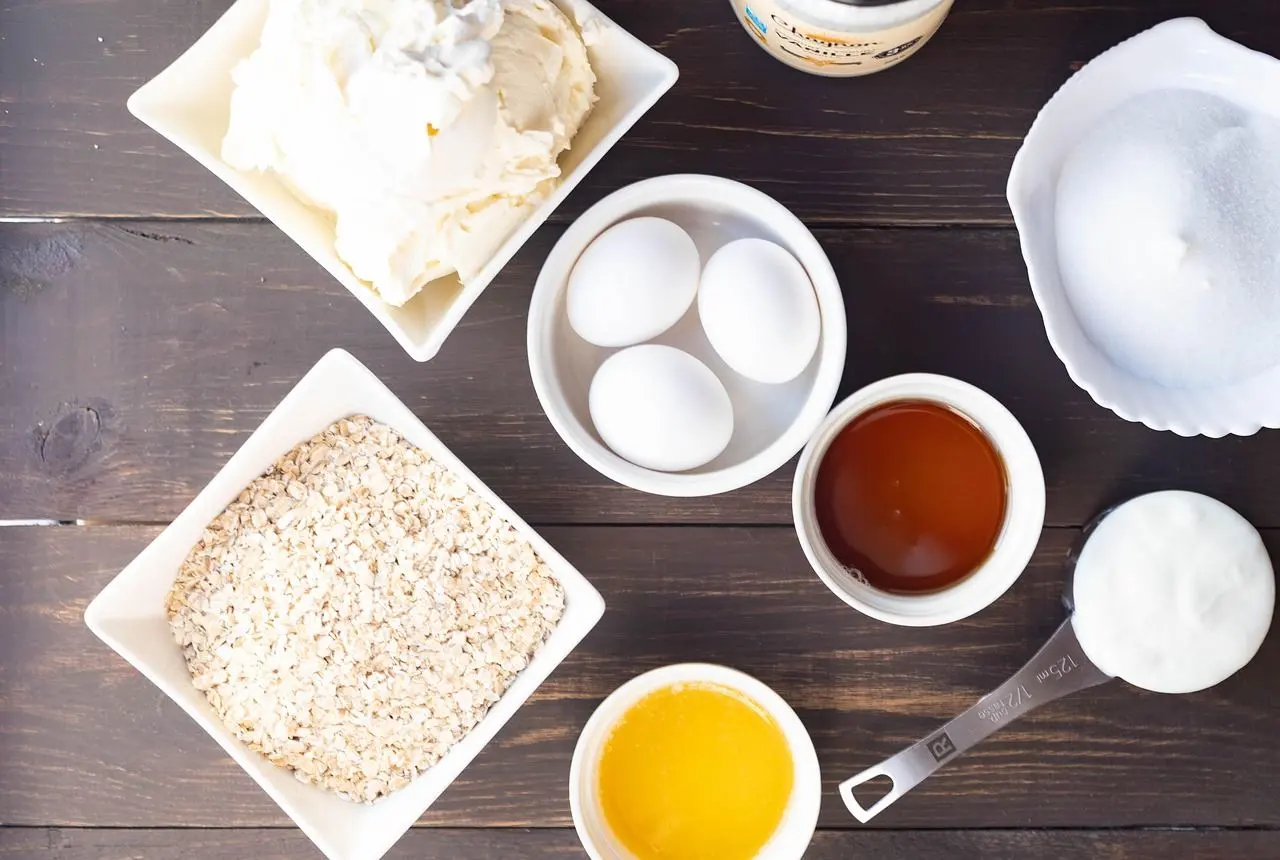
Out of an ingredient mid-recipe? Baking substitutions work best when you match what the missing item does, such as lift, moisture or tenderness. Swap only a few things at a time and expect small changes in flavor and texture.
For wider pantry context, the baking ingredients and kitchen guide covers the staples behind these swaps.
| Ingredient | Common swap |
|---|---|
| Buttermilk, 1 cup | 1 tablespoon vinegar or lemon juice plus enough milk to make 1 cup |
| Baking powder, 1 teaspoon | 1/4 teaspoon baking soda plus 5/8 teaspoon cream of tartar |
| Cake flour, 1 cup | 2 tablespoons cornstarch plus all-purpose flour to fill a 1 cup measure |
| Light brown sugar, 1 cup | 1 cup granulated sugar plus 1 tablespoon molasses |
| Heavy cream, 1 cup | 3/4 cup milk plus 1/3 cup butter or margarine |
| Sour cream, 1 cup | 1 cup plain yogurt |
These figures come from Utah State University Extension and Jessica Gavin. Amounts can change or differ between sources, so check the source before you rely on them.
How substitutions change flavor, texture and rise
Every ingredient does a job in a recipe, and a swap only works when the replacement covers that job. K-State Research and Extension says a substitute may alter the flavor, color, texture or volume but can still give an acceptable product, as set out in its ingredient substitutions handout.
Before you reach for a replacement, name what the missing ingredient was doing:
- Lift: baking powder is essentially baking soda plus acid, according to NC State Extension.
- Structure: eggs provide structure and richness, says Jessica Gavin.
- Tenderness: tangy buttermilk adds flavor and tenderness, according to the same Gavin guide.
- Moisture: banana or fruit puree adds extra moisture that eggs normally provide, per NC State Extension.
Leavening swaps: baking powder, baking soda and buttermilk
To replace baking powder, USU Extension lists 1/4 teaspoon baking soda plus 5/8 teaspoon cream of tartar for each 1 teaspoon needed. Its list also offers soured milk, buttermilk, vinegar, lemon juice or molasses as the acid partner for the soda.
Going the other way is not one-for-one, because Jessica Gavin notes baking soda is four times more potent than baking powder. When a recipe calls for ¼ teaspoon baking soda, she says to use 1 teaspoon baking powder. A homemade powder mix should be baked right away, since the gas forms on contact with the acid.
For buttermilk, these swaps are listed for 1 cup:
- Acidified milk: 1 tablespoon vinegar or lemon juice plus enough milk to make 1 cup, left to stand 5 minutes (USU Extension).
- Cream of tartar: 1 3/4 teaspoons stirred into 1 cup milk (USU Extension).
- Yogurt: 1 cup plain yogurt (USU Extension).
- Kefir: a direct substitute for buttermilk, according to Jessica Gavin.
Standing times vary by source, and Gavin lets acidified milk sit for 10 minutes before use (Jessica Gavin).
Dairy and fat swaps: cream, sour cream and butter
A cup of heavy cream can be replaced for cooking and baking with 3/4 cup milk and 1/3 cup butter or margarine, according to USU Extension. NC State Extension adds that this mixture is intended for baking because it will not whip.
For sour cream, USU lists 1 cup plain yogurt in its substitution list. Baking Sense calls Greek yogurt the closest in texture, and NC State Extension says it has a similar fat content and acidity, which helps keep a tender crumb in cakes, muffins and quick breads.
Butter is the trickiest to replace. Jessica Gavin notes that butter is typically about 80% butterfat, while margarine, shortening and coconut oil are nearly 100% fat, so the bake may taste greasier.
- Equal parts of margarine, vegetable shortening, lard or coconut oil (Jessica Gavin).
- 1 cup margarine, or 7/8 cup oil, for 1 cup butter (USU Extension).
Oil may slightly alter the texture, and NC State Extension limits it to recipes where butter isn’t key for structure.
Sugar and sweetener swaps
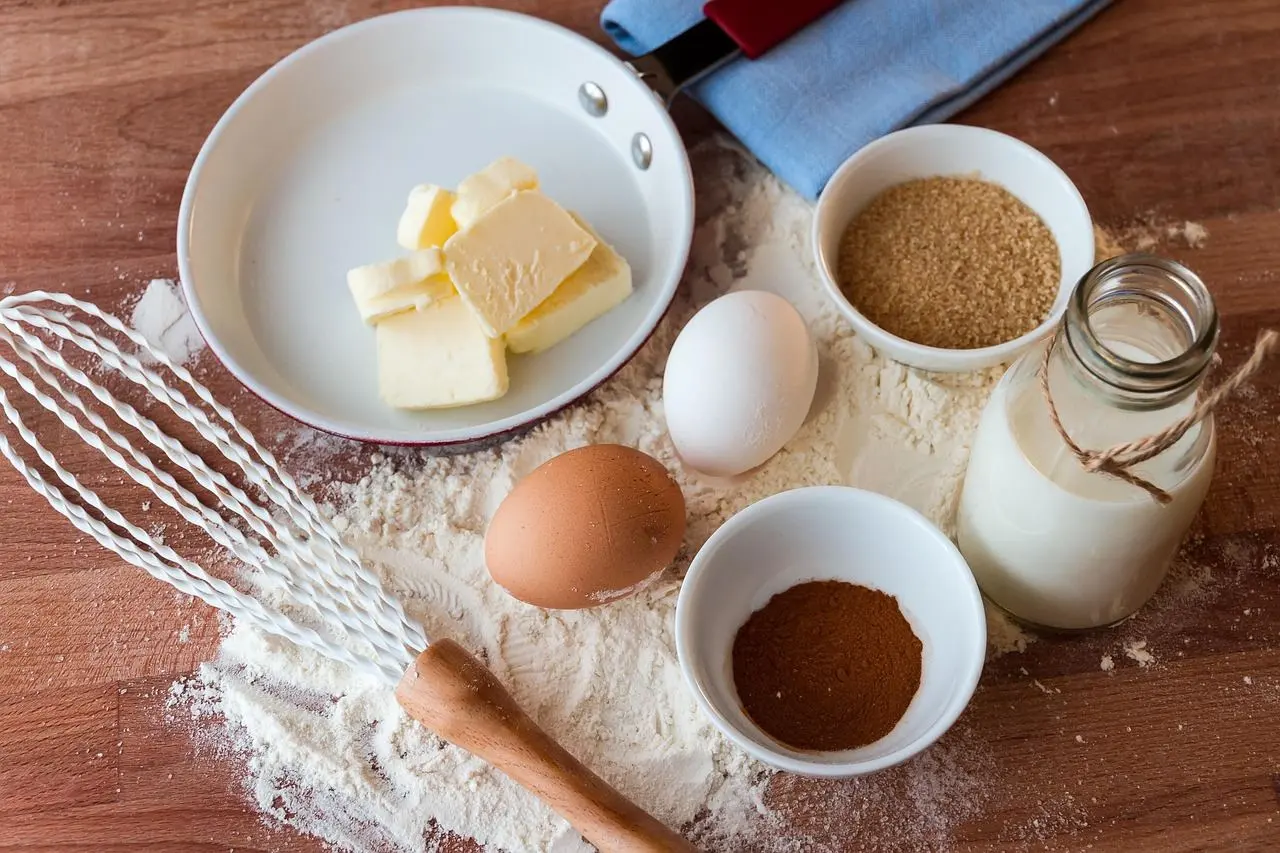
Homemade brown sugar is granulated sugar plus molasses. Jessica Gavin combines 1 cup of granulated sugar with 1 tablespoon of molasses for light brown sugar, and adds two tablespoons molasses for dark brown sugar.
Other sources use more molasses. Baking Sense gives 1 ½ to 2 tablespoons per cup of white sugar, while NC State Extension uses ¼ cup molasses with 1 cup granulated sugar. Gavin also explains that more molasses means a stronger caramel flavor and a darker color.
A few other sweetener swaps are worth knowing:
- Powdered sugar: blend 1 cup of granulated sugar with 1 teaspoon of cornstarch until very fine (Jessica Gavin).
- Honey: 1 1/4 cups sugar plus 1/4 cup water for each 1 cup of honey (USU Extension).
- Honey in place of sugar: 3/4 cup honey for 1 cup granulated sugar, with the liquid cut by 1/4 cup (USU Extension), plus 1/2 teaspoon soda for each cup of honey.
Flour, starch and egg swaps
Cake flour has a protein level between 6 to 8%, while all-purpose flour has up to 13% and bread flour up to 15%, according to Jessica Gavin. To mimic cake flour she puts 2 tablespoons of cornstarch in a 1 cup measuring cup and fills the rest with all-purpose flour, about ⅞ of a cup.
Going the other direction is simpler: for 1 cup of bread flour, Gavin substitutes 1 cup of all-purpose flour, and the texture won’t be as chewy. Baking Sense adds that whole grain flour can replace up to ½ the white flour in most bread recipes.
As a thickener, 1 tablespoon of cornstarch equals 2 tablespoons of all-purpose flour on the USU Extension list. Jessica Gavin uses 1 ½ tablespoons of all-purpose flour for the same job, so the exact ratio is not settled.
For eggs, Gavin mixes 1 tablespoon ground flaxseed with 3 tablespoons water, lets it sit for 10 minutes, and says not to replace more than two eggs this way (Jessica Gavin). Baking Sense says commercial egg replacers suit many bakes unless eggs are a major component, as in custard or sponge cake. More options are in our guide to egg substitutes in baking.
How do you keep a swap from going wrong?
A few habits from NC State Extension reduce the risk of a flat or off-flavored result:
- Always test substitutes in small batches before committing to a full recipe.
- Check flavor, since olive oil or Greek yogurt may slightly alter it, and use milder versions for delicate bakes.
- Watch liquid, because applesauce or honey add moisture and you may need to reduce other liquids slightly.
- Don’t swap more than 2-3 ingredients at once.
If you bake a substituted cake ahead of time, the guide on can you freeze cake covers keeping it for later.
Frequently asked questions
Can baking soda stand in for baking powder?
Show answer
Not on its own. Soda has no acid built in, so the batter needs something acidic, and NC State Extension explains that the acid reacts with baking soda to leaven pancakes and cakes.
Can fruit puree replace some of the butter?
Show answer
In quick breads, yes. Baking Sense says applesauce or prune puree can replace up to ½ the butter for a lower-fat version.
Will a substitute change the taste?
Show answer
Often, yes. Strongly flavored swaps such as olive oil leave a noticeable taste, so delicate cakes do better with milder choices, as NC State Extension suggests.
Do all sources give the same amounts?
Show answer
No. The cornstarch-to-flour ratio differs between USU Extension and Jessica Gavin, and molasses quantities for brown sugar vary too. Pick one source per recipe and stay consistent.