
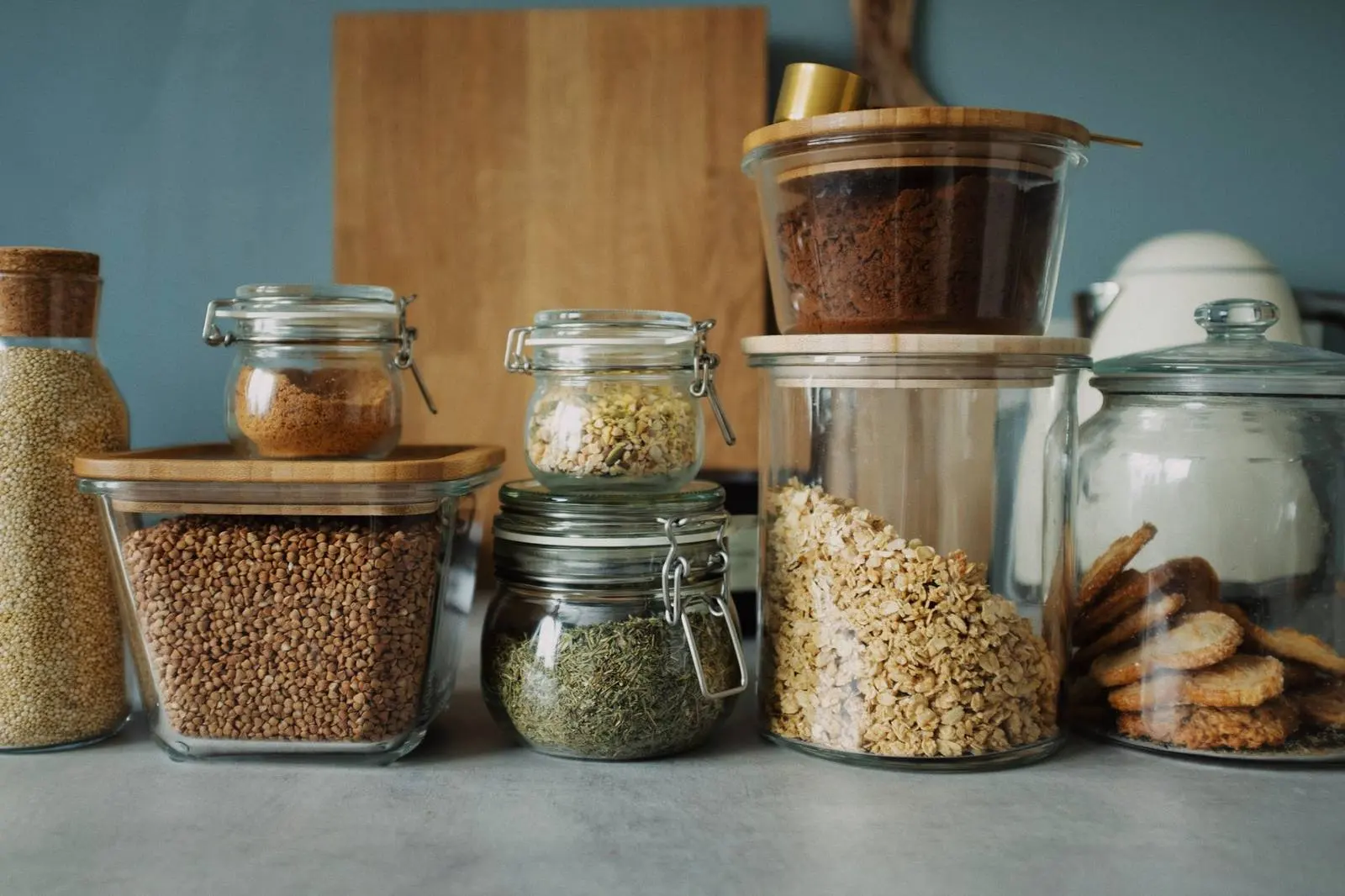
Worried your flour, spices or yeast are past their best? This baking ingredients and kitchen guide gives you the short answer: keep staples cool, dry and dark, label them, and use the oldest first.
| Item | Value |
|---|---|
| Pantry storage temperature | About 50°F (60 to 70°F is acceptable) |
| Refrigerator setting | Between 34 and 40°F |
| Freezer setting | 0°F or lower; should not rise above 5°F |
| Shelf position | 6 inches from the floor and 18 inches from outer building walls |
| Eggs after the listed sell-by date | 3 to 5 weeks |
These figures come from New Mexico State University’s storing food safely guide and Illinois Extension’s room temperature storage page. Storage advice can change, so check the source before you rely on the figures.
Where to store baking ingredients
The first decision is the location. K-State Research and Extension advises keeping foods in a cool, dry, dark spot away from heat sources like appliances and the sun, and notes that how long food lasts in a cupboard depends on the food, the temperature, the packaging and the cupboard itself (K-State Extension).
For a temperature target, New Mexico State University gives about 50°F, with 60 to 70°F acceptable, and suggests choosing an area free from fluctuating temperatures, such as a garage (NMSU). The same guide adds that dark areas maintain food quality longer.
A few habits cover most pantries:
- Pick the coolest cabinet, away from the oven, stove and refrigerator exhaust, because oils are prone to turning rancid from heat (NMSU).
- Place shelving 6 inches from the floor and 18 inches from outer building walls (NMSU).
- Keep stored food off the floor so it does not come into contact with moisture (NMSU).
- Store food and cleaning supplies in separate areas (Illinois Extension).
Together these rules keep flour, sugar and other dry goods away from heat, light and damp.
Containers, labels and rotation
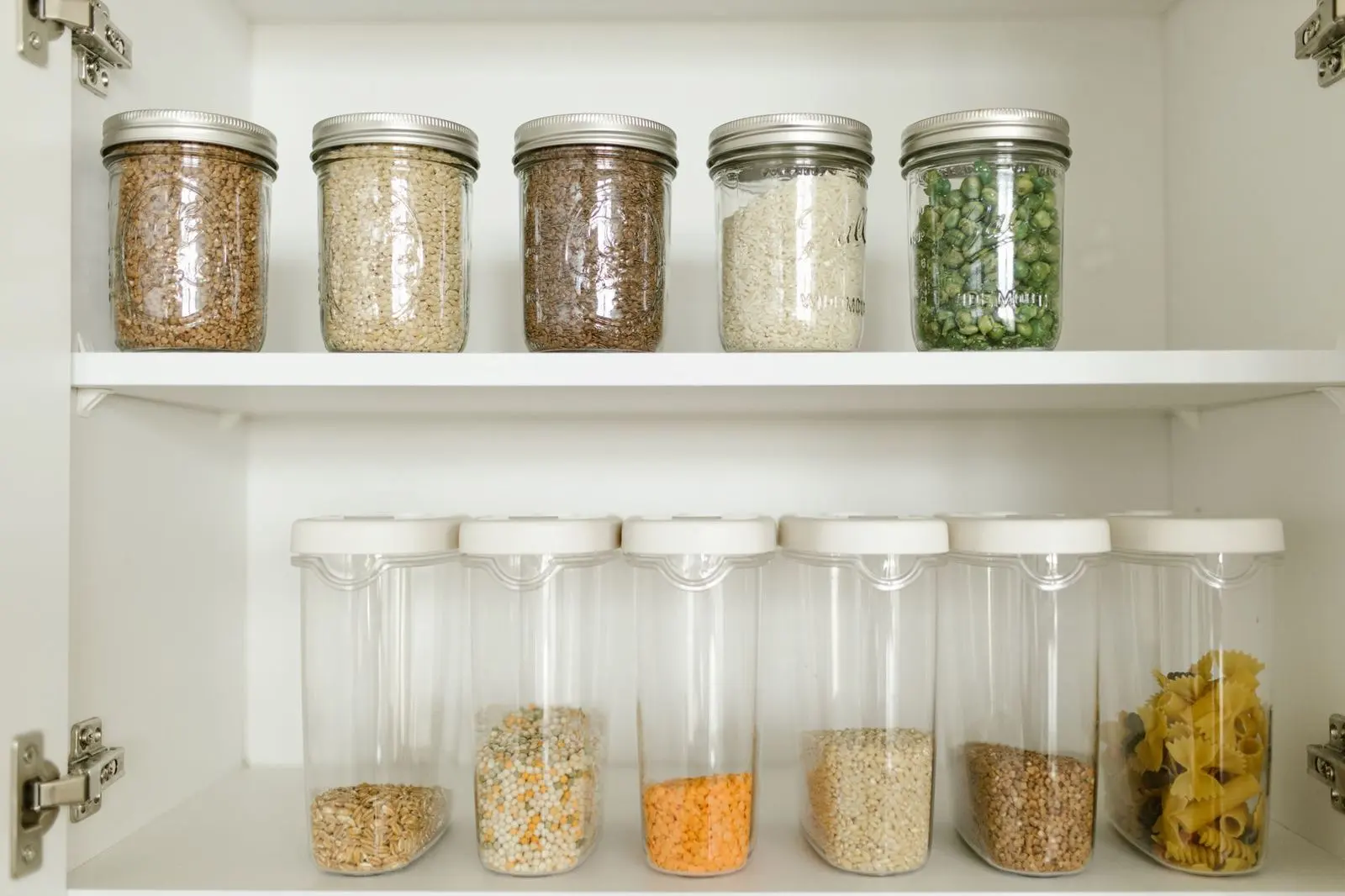
Once the spot is chosen, the container does the daily work. NMSU recommends metal, glass or plastic containers, or storage bags with tight-fitting zippers or lids, to keep out moisture, air and insects (NMSU). Illinois Extension adds that opened food should be covered with a storage bag or placed in a lidded container so pests cannot get in (Illinois Extension).
Which items count as baking staples? NMSU’s pantry list names flour, sugar, baking soda and powder, salt, nuts, raisins, jam, honey and oils (NMSU). Anything on that list benefits from a lid and a label.
A simple rotation routine looks like this:
- Write the contents and the date stored on every dried, refrigerated or frozen item, using a marking pen, labels or masking tape.
- Once a month, sort through what you have so the oldest dates sit at the front and the freshest at the back.
- Put new purchases at the back of the shelf.
- Reach for the front item first.
That routine is the First In, First Out method, which Illinois Extension recommends to maximize quality and reduce food waste (Illinois Extension). The monthly sort and the labels come from NMSU’s guide (NMSU).
If you are still stocking a first kitchen, the guide to baking for beginners is a sensible companion read.
How to read date labels on baking staples
Package dates are mostly a guide to quality. Illinois Extension describes a Best If Used By date as a recommendation for when flavor or quality is highest, and says it is not a purchase or safety date (Illinois Extension).
Manufacturers choose their own dates (NMSU). Wisconsin’s Department of Public Instruction points out that improper handling and inadequate storage temperatures can shorten a food’s useful life (Wisconsin DPI).
Illinois Extension distinguishes several kinds of date:
- Sell by or pull date: shows when stores must remove products.
- Pack date: usually found on canned foods, crackers, cookies and spices, and records when the product was packaged.
- Use by date: the last date recommended to ensure peak quality, set by the manufacturer.
- Expiration date: printed on items that include yeast, baking powder, cake mixes and pectin.
Leavening agents like yeast stay safe past the expiration date but may not be as effective, so it is worth checking them before you start a recipe (Illinois Extension).
When a date has passed, use your senses. Illinois Extension says to skip a product with a broken seal or one that smells or tastes bad, while NMSU adds that vision and smell are big indicators of food quality and that you should never taste the food in question (Illinois Extension, NMSU).
Fridge and freezer: settings, packing and labels
Set the refrigerator between 34 and 40°F and place a thermometer near the door so temperature swings are easy to spot (NMSU). Avoid overloading the shelves, because air must circulate freely to cool all foods evenly.
The freezer should sit at 0°F or lower, with a thermometer used to confirm it does not rise above 5°F (NMSU).
Wrapping matters as much as temperature. NMSU suggests plastic wrap, storage bags, foil or air-tight containers to keep refrigerated food from drying out (NMSU).
Before anything goes into the freezer, label it with the date packed, the type of food and the weight or number of servings. When using freezer bags, press out the air and check that the zipper seal is tight.
NMSU lists bread and baked goods, panko and breadcrumbs, and nuts among foods that freeze well (NMSU). For layers and frosting specifically, the separate guide on can you freeze cake goes into more detail. Finished bakes also have their own short-term rules, set out in the guide on how to store baked goods.
Spices and other long-keeping ingredients
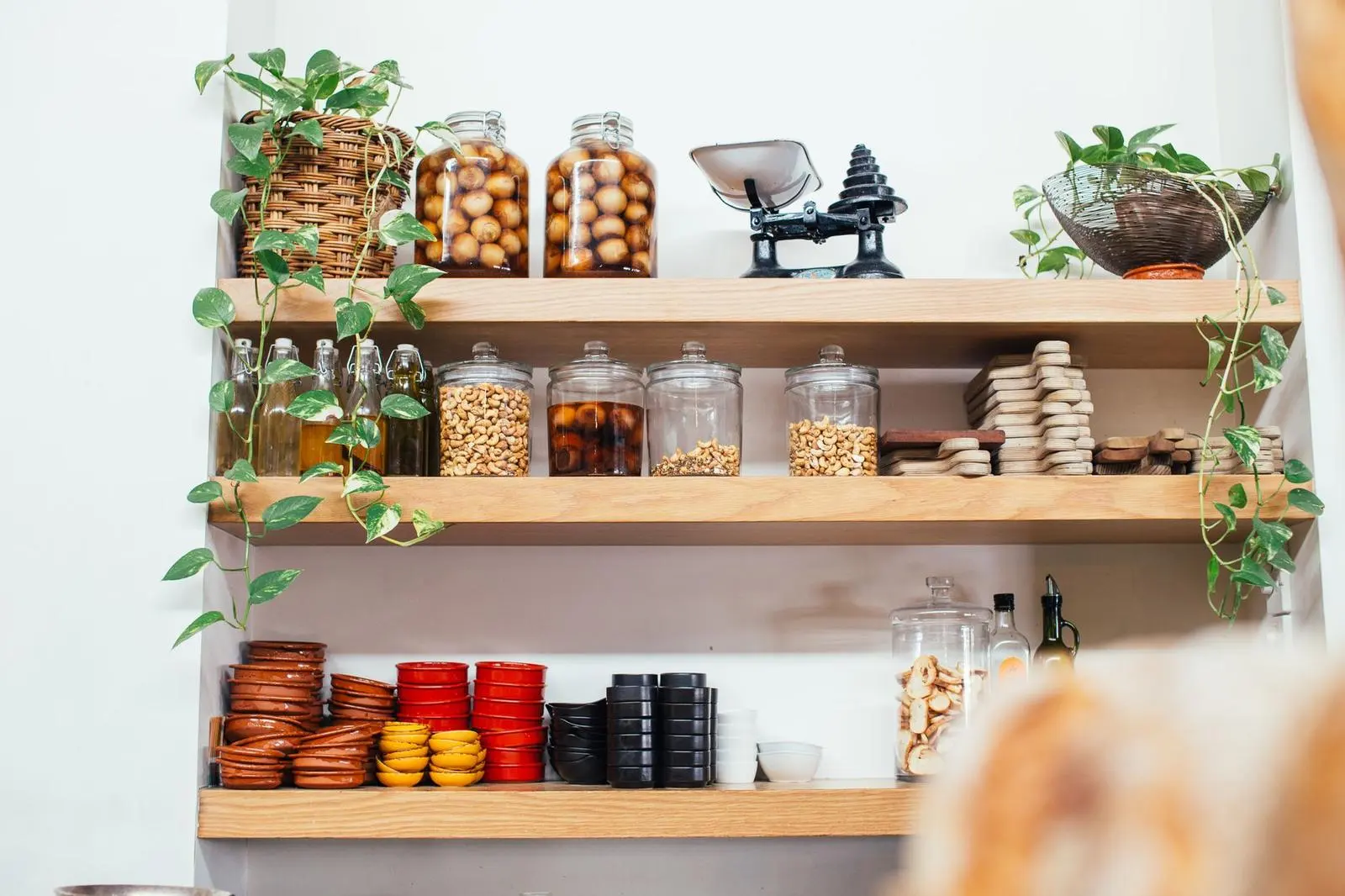
Spices keep well but not forever. K-State’s chart says to store them in airtight containers in dry places away from sunlight and heat, and to replace any whose aroma has faded (K-State Extension).
Whole spices last longest: whole cloves, nutmeg and cinnamon sticks maintain quality beyond 2 years, according to the same chart (K-State Extension). A quick sniff is therefore a better test than the calendar.
The same logic applies to the rest of the baking cupboard. Check dates, look at the container, and treat any date as a quality cue rather than a hard deadline.
Storage tools, substitutions and where to go next
The storage advice above needs only a handful of simple tools, all drawn from the sources:
- A thermometer for the refrigerator and another for the freezer.
- Lidded containers in metal, glass or plastic, plus zip-seal storage bags.
- A marking pen, labels or masking tape for dates and contents.
The sources behind this guide do not give swap ratios or buying advice, so those topics sit in their own guides:
- When a staple runs out mid-recipe, the guide to baking substitutions is the place to start.
- Eggs have a page of their own, covering egg substitutes in baking.
- Chocolate has a technique page too, explaining how to melt chocolate.
- If you avoid gluten, the guide to gluten free baking flour is the next stop.
- A fuller tool list sits in the guide to essential baking equipment.
Once the shelves are organized, you can put the stock to work with some easy dessert recipes.
Frequently asked questions
Does a best-by date mean the food is unsafe afterwards?
Show answer
Not necessarily. Wisconsin’s Department of Public Instruction says food can be eaten after a Best If Used By date if it has been properly stored and handled and its container is in good condition (Wisconsin DPI).
Can partially thawed food be refrozen?
Show answer
NMSU says yes, provided ice crystals remain and the food has spent no longer than a day at refrigerator temperatures. Quality may drop, so cooking first and then refreezing is the better route, and thawed combination dishes such as stews and casseroles should not go back in the freezer (NMSU).
How long do eggs and dairy last past the sell-by date?
Show answer
Illinois Extension puts eggs at 3 to 5 weeks after the listed date and says dairy products are usually edible at least one week beyond it. Its guidance assumes the food has been refrigerated (Illinois Extension).
Can flour and sugar live at room temperature?
Show answer
Yes. Illinois Extension lists baking staples such as flour and sugar among foods that can be stored safely at room temperature, as long as the area stays dry (Illinois Extension). Some shelf-stable foods need the refrigerator once opened, so read each package.