
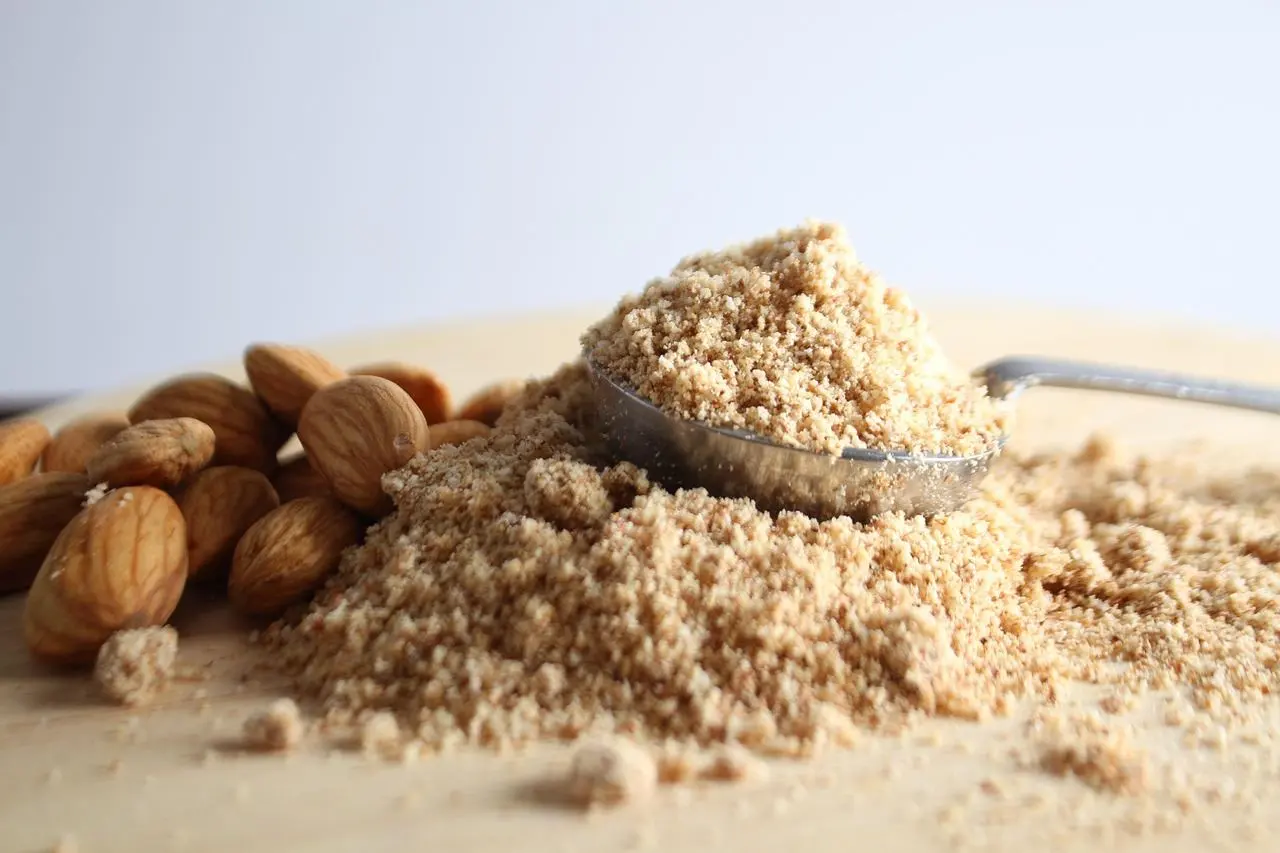
Gluten free baking flour works best as a blend of flours and starches, not a single swap. If you’re staring at a pantry shelf unsure what to buy, start with a ready-made blend, then learn what each flour does.
This page is part of the baking ingredients and kitchen guide, which covers pantry staples more broadly.
| Item | Value |
|---|---|
| Gluten-free label standard cited by Bob’s Red Mill | Less than 20 ppm of gluten |
| Broad categories of gluten-free flour (SBS Food) | Three categories |
| Sorghum share in a blend, one author’s limit | No more than 30 per cent |
| Binder in a cup-for-cup 1-to-1 blend | Xanthan gum |
These figures come from Bob’s Red Mill’s flour guide and SBS Food’s flour guide, and they can change, so check the source before you rely on them.
What gluten does in baking
Gluten is a protein found in grains such as wheat, barley and rye. According to Bob’s Red Mill, it traps gas bubbles, acts as a binder and gives dough elasticity, which is where rise, structure and chewiness come from.
Without it, baked goods can turn out dense, crumbly, dry or gummy when the flour isn’t designed for the type of baking you’re doing. That is why no single flour copies wheat, and why a good gluten free baking flour is usually a combination of ingredients.
Ready-made blends versus single flours
A blend combines several flours, starches and binders to give structure, texture and moisture similar to all-purpose flour, as Bob’s Red Mill describes it. Single-ingredient flours work differently: some add structure, others softness, moisture or flavour, and many work best paired with other flours or starches.
The reason for mixing is spelled out by Minimalist Baker. All-purpose flour supplies stretch, lightness, crispness and a neutral flavour, and in gluten-free baking you typically need several flours and starches to recreate that.
Binders are the next thing to check. Some blends already contain xanthan gum or guar gum, while others leave them out so you can add the amount a recipe calls for.
As a neutral example from Bob’s Red Mill, its Gluten Free 1-to-1 Baking Flour is described as a cup-for-cup swap for wheat flour in non-yeast recipes. It combines white rice flour, brown rice flour, potato starch, sorghum flour, tapioca flour and xanthan gum, and the company lists yeast breads among the things to skip it for.
The same page describes a separate all-purpose blend with no xanthan or guar gum, so the binder comes from the recipe. It is positioned for yeast breads, pie crust, pizza dough and rolls.
Brands differ a lot. SBS Food notes that the quality of commercial gluten-free plain flours can vary greatly, and suggests trying a few before settling on one.
When shopping, look for products labelled gluten free and tested to the FDA standard of less than 20 ppm of gluten, a threshold cited by Bob’s Red Mill.
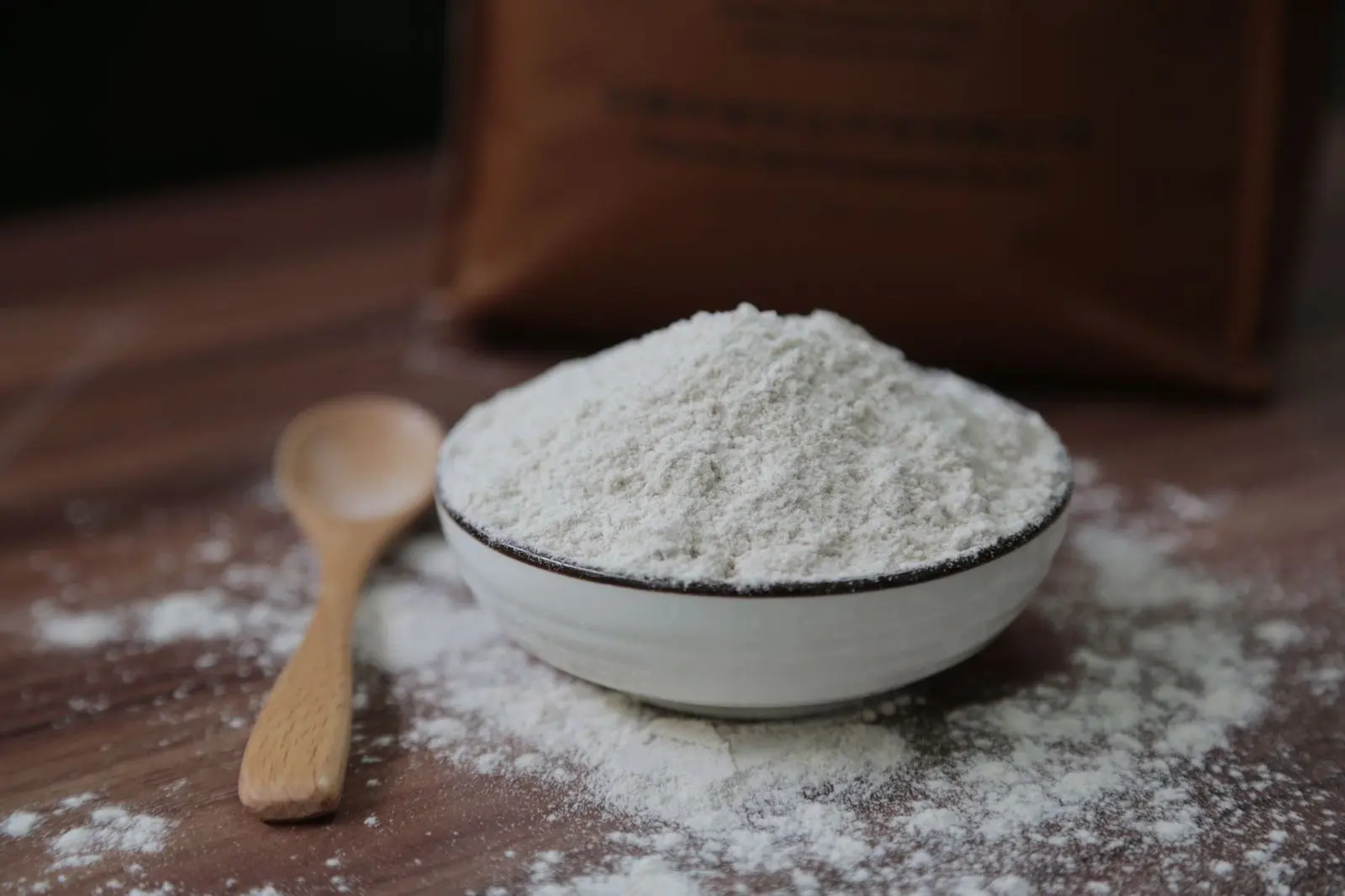
Starches: lightness, stretch and thickening
Starches are not flours in the strict sense, but gluten-free blends lean on them. These are the ones you will meet most often:
- Potato starch suits a light, cake-like texture, according to Minimalist Baker. Do not confuse it with potato flour, which SBS Food says is made from whole potatoes and has a heavy texture and strong potato flavour.
- Tapioca comes from the cassava plant and is called the most versatile flour in the gluten-free pantry by SBS Food. On its own it can turn sticky and stretchy, so it is usually part of a blend.
- Cornstarch thickens puddings and sauces and can add a light, crumb-like texture to baked goods.
- Arrowroot can stand in for tapioca or cornstarch. It is less stretchy than tapioca, more stretchy than cornstarch, and can turn gelatinous if too much liquid is added.
Read labels on corn products. SBS Food advises buying cornflour made purely from corn and marked gluten free, because some brands contain wheat.
Grain, seed and nut flours
SBS Food sorts gluten-free flours into three categories: neutral white flours for bulk and starch, nut meals for protein and moisture, and wholesome flours for protein and fibre. If you need to avoid an ingredient because of an allergy, the advice there is to swap within the same category.
Rice, sorghum and oat
- Brown rice flour provides structure but can be gritty and dense, so Minimalist Baker pairs it with lighter starches such as potato starch and cornstarch.
- White rice flour is lighter in colour than brown but can be slightly gritty and gummy, and works best blended.
- Sorghum has a mild sweetness and tender crumb but lacks binding, so it needs a stretchy partner such as tapioca. It also has a bitter side: the SBS Food author generally uses no more than 30 per cent sorghum in a flour blend, per SBS Food.
- Oat flour suits recipes that want a dense texture and mild, slightly sweet flavour. Skip heavy, sticky additions such as bananas and add baking powder to help it puff, per Minimalist Baker.
Nuts, seeds and roots
- Almond flour is made from blanched almonds without skins, which gives a light, pale result. Almond meal keeps the skins and suits heartier muffins, cookies and crackers, so the two are not ideal to swap.
- Buckwheat is a seed and contains no wheat. It is dense and absorbent, and holds up in strongly flavoured recipes with chocolate, spices or banana.
- Cassava flour is mild, light and absorbent, and some recipes allow a one-for-one swap for all-purpose flour.
Stronger-tasting flours are best added in moderation. Alive magazine suggests replacing up to 25 percent of the flour with hemp flour, and starting with only 25 percent quinoa flour.
Alive also describes teff as taking on a slightly gelatinous consistency that almost mimics gluten, and calls sorghum the closest to traditional wheat flour.
Matching a flour to what you are baking
Start from the recipe, then pick the flour. This rough order follows the guidance in the sources above:
- For cookies, cakes, muffins, brownies, pancakes and quick breads, reach for a cup-for-cup blend that already contains a binder.
- For yeast bread, pie crust or pizza dough, choose a blend without added binder and follow the recipe’s binder amount.
- For a light, cake-like crumb, combine almond flour with potato starch, a pairing Minimalist Baker favours.
- For hearty, earthy bakes, add buckwheat or sorghum, softened with a neutral white flour such as sweet rice or tapioca.
If your recipe calls for chocolate, a separate guide on how to melt chocolate covers that step. Once the bake has cooled, how to store baked goods covers keeping it at its best.
Frequently asked questions
Can I swap gluten-free flour for wheat flour cup for cup?
Show answer
Only with a product made for it. A blend sold as cup-for-cup is built for that job in non-yeast recipes, while a single flour such as brown rice or buckwheat generally cannot replace wheat on its own.
Do I always need xanthan gum?
Show answer
Not always, since many blends already include a binder. If you are sensitive to it, SBS Food lists psyllium husks or ground chia seeds as alternatives that add elasticity.
What can I use if someone has a nut allergy?
Show answer
Seed meals such as pumpkin or sunflower can fill in for nut meals, according to SBS Food. Tiger nut flour is another option, since tiger nuts are a root vegetable rather than a nut.
Why did my gluten-free bake fall apart?
Show answer
The flour may simply not suit that kind of recipe. Almond flour used alone is one example, since Alive magazine says it can be crumbly and suggests adding another egg.