
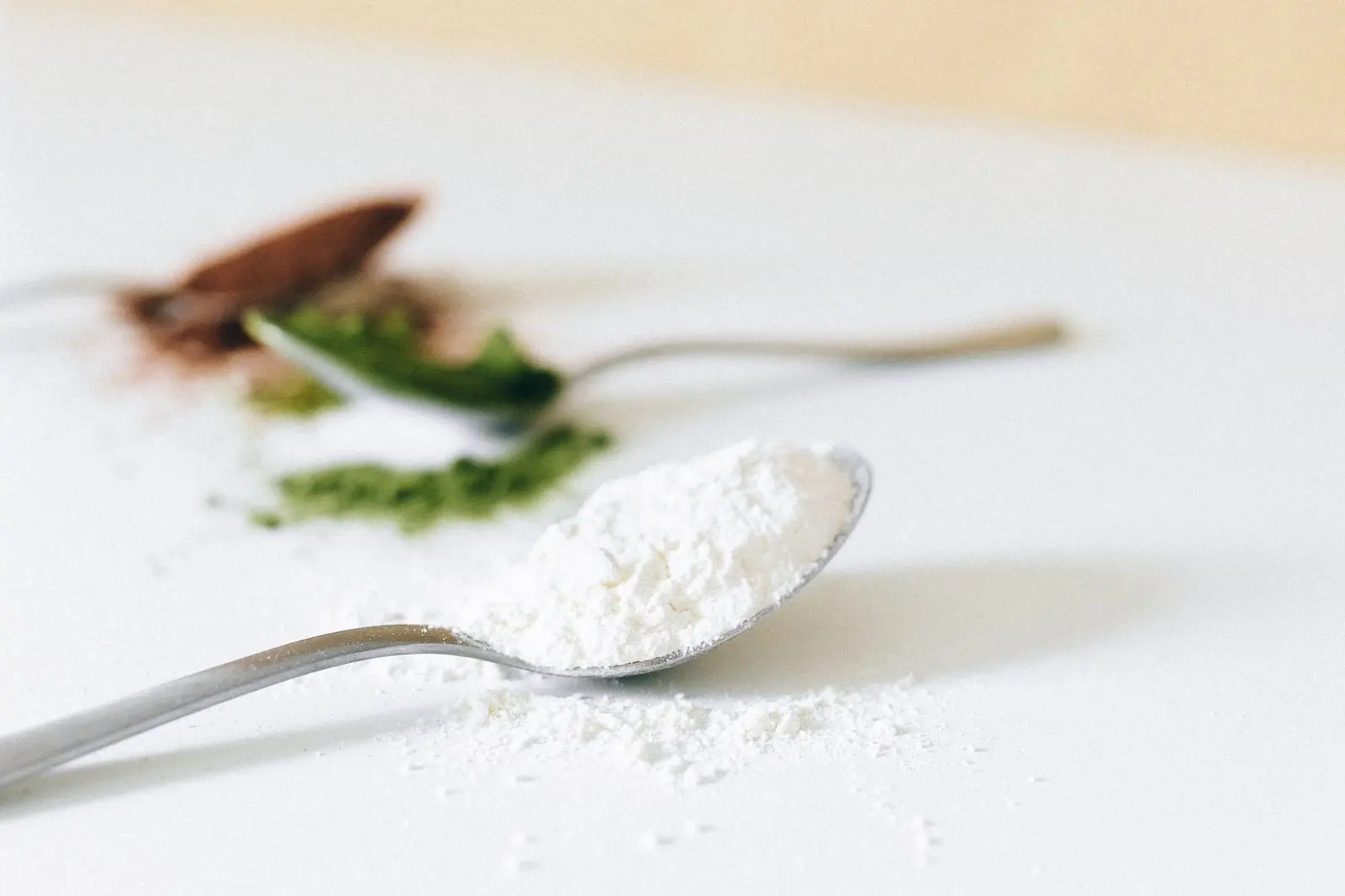
Mixed up baking powder vs baking soda and unsure which your recipe needs? The short answer is acid: baking soda needs an acid in the batter to work, while baking powder already carries its own.
If you are still learning the basics, the guide to baking for beginners puts this topic in context.
| Item | Value |
|---|---|
| Baking soda is | Sodium bicarbonate, a single ingredient |
| Baking powder is | Baking soda plus one or more acids and a stabilizer such as cornstarch |
| Relative strength | Baking soda is about 3-4 times as strong as baking powder |
| Rule-of-thumb swap (powder for soda) | Three teaspoons of baking powder for one teaspoon of baking soda |
| Main kinds of baking powder | Two: single-action and double-action |
| Baking powder first created | 1843 |
These figures come from Arm & Hammer’s baking guide and WebMD; they can change, so check the source before you rely on them.
What baking soda and baking powder are
Both are leavening agents, meaning they make dough or batter expand by releasing gas, as Arm & Hammer puts it. Unlike yeast, which takes hours to work, both powders begin reacting almost instantly, WebMD notes.
Baking soda is pure sodium bicarbonate, a fine white powder, according to Arm & Hammer. NC State News describes it as a base that reacts on contact with acids like buttermilk, yogurt or vinegar, and WebMD adds that it is sometimes called bicarbonate of soda.
Baking powder is a blend of baking soda, one or more acid components and a stabilizer such as cornstarch, so the acid it needs is already built in. Brands can use different acid components, which changes flavor and performance, Arm & Hammer says. It is also the newer of the pair, first created in 1843 by Alfred Bird, per WebMD.
How the two react in a batter
The trigger is acid. Ingredients such as honey, buttermilk, molasses, chocolate, yogurt, sour cream, brown sugar or cocoa set off a reaction that produces carbon dioxide bubbles, as listed by Arm & Hammer.
Speed is the catch. NC State News points out that baking soda pretty much reacts immediately once it meets an acid, so the timing of getting the batter into the oven matters, as Arm & Hammer explains.
Double-action baking powder is more commonly used, and it spreads the work across three stages according to Arm & Hammer and NC State News:
- Mixing: moisture meets the soda and the acid, which starts the first round of bubbles.
- Baking: oven heat triggers a second round of bubbles.
- Setting: egg proteins firm up and give the foamy batter a solid structure that holds its shape.
Single-action powder skips the second round and makes its bubbles on contact with moisture, much like soda, per Arm & Hammer. In yeast recipes, gluten proteins in flour play a similar trapping role, and the guide to types of flour for baking explains how flours differ, based on the point made by NC State News.
When each one is used
Which one a recipe calls for depends on the acid already in the mix, because the amount of baking soda correlates to the quantity of acid, as Jessica Gavin explains. These are the usual patterns:
- Baking soda: primarily used for cookies and muffins, says Arm & Hammer.
- Baking soda in cookies: it can add crispiness and a rich, dark color, and it works well with brown sugar because the molasses supplies the acid, according to Discover Magazine.
- Baking powder: gives light, fluffy results in cakes, muffins, biscuits and quick breads, per Discover Magazine.
Baking powder is often the default in cakes and cookies because it removes the need to calculate how much acid belongs in the batter, Discover Magazine says. With its acid built in, it also suits recipes without molasses or buttermilk, according to Arm & Hammer.
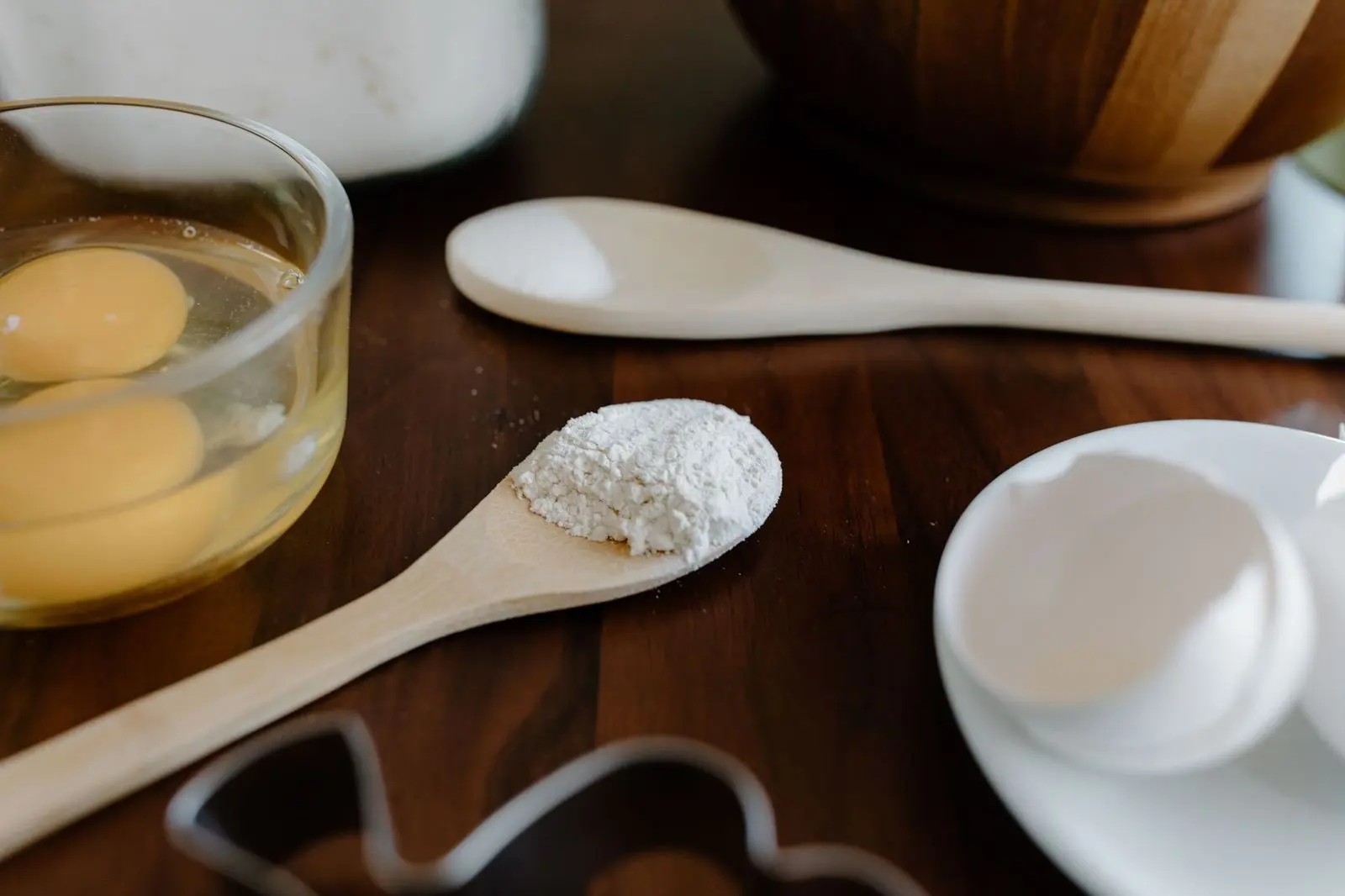
Can you swap one for the other?
Not in equal amounts. WebMD says never to swap them directly in a one-to-one ratio, and Arm & Hammer puts baking soda at about 3-4 times as strong, so a one-to-one swap goes wrong either way.
If a recipe asks for baking soda and you only have powder, WebMD suggests three teaspoons of baking powder for one teaspoon of baking soda, with no extra acid needed. Going the other way takes three steps:
- Check whether the recipe already contains an acid such as buttermilk, yogurt or brown sugar.
- If it does, use one-quarter of a teaspoon of baking soda for every teaspoon of baking powder.
- If it does not, add an acid alongside the soda, such as cream of tartar, lemon juice or white vinegar.
Those steps follow WebMD, which also warns that lemon juice and vinegar can slightly alter the taste of the finished bake. Jessica Gavin is more cautious, calling soda a poor substitute because the acid ratios in commercial baking powder are hard to know.
Using both, using too much, and keeping them fresh
Plenty of recipes call for both. The soda neutralizes the acids in the recipe while the powder adds extra bubbles for lift, per Jessica Gavin, and Discover Magazine adds that a little soda can also tame very sour ingredients.
Too much soda is the common mistake. Unreacted excess can leave an alkaline taste or gray color, according to Discover Magazine, and WebMD describes the flavor as metallic or soapy.
Both go stale, so storage matters. Jessica Gavin recommends keeping them covered and sealed in a cool, dry place, and says opened tins are good for 6 to 12 months. To check a tin, stir a small amount into hot water, adding a little vinegar when testing soda: an immediate fizz means it is good to go.
Once leaveners feel familiar, a guide on how to make shortcrust pastry is a natural next skill to practise.
Frequently asked questions
Is baking powder the same as baking soda?
Show answer
No. Baking powder is a mixture that holds baking soda together with a dry acid, so it can lift a batter by itself, whereas soda is a lone base that waits for an acid, as Discover Magazine explains.
What happens if I use baking soda with no acid in the recipe?
Show answer
The soda has nothing to react with, so the bake may rise poorly and taste bitter or soapy, according to Arm & Hammer.
Do I have to bake the batter straight away?
Show answer
It is less urgent with double-action powder, because WebMD says you do not have to move as quickly when using that type. Soda-only batters are different, since their bubbles start forming at once.
Is baking soda an acid or a base?
Show answer
It is a base. Discover Magazine places sodium bicarbonate on the basic side of the pH scale, which is why something acidic must be present to activate it.