
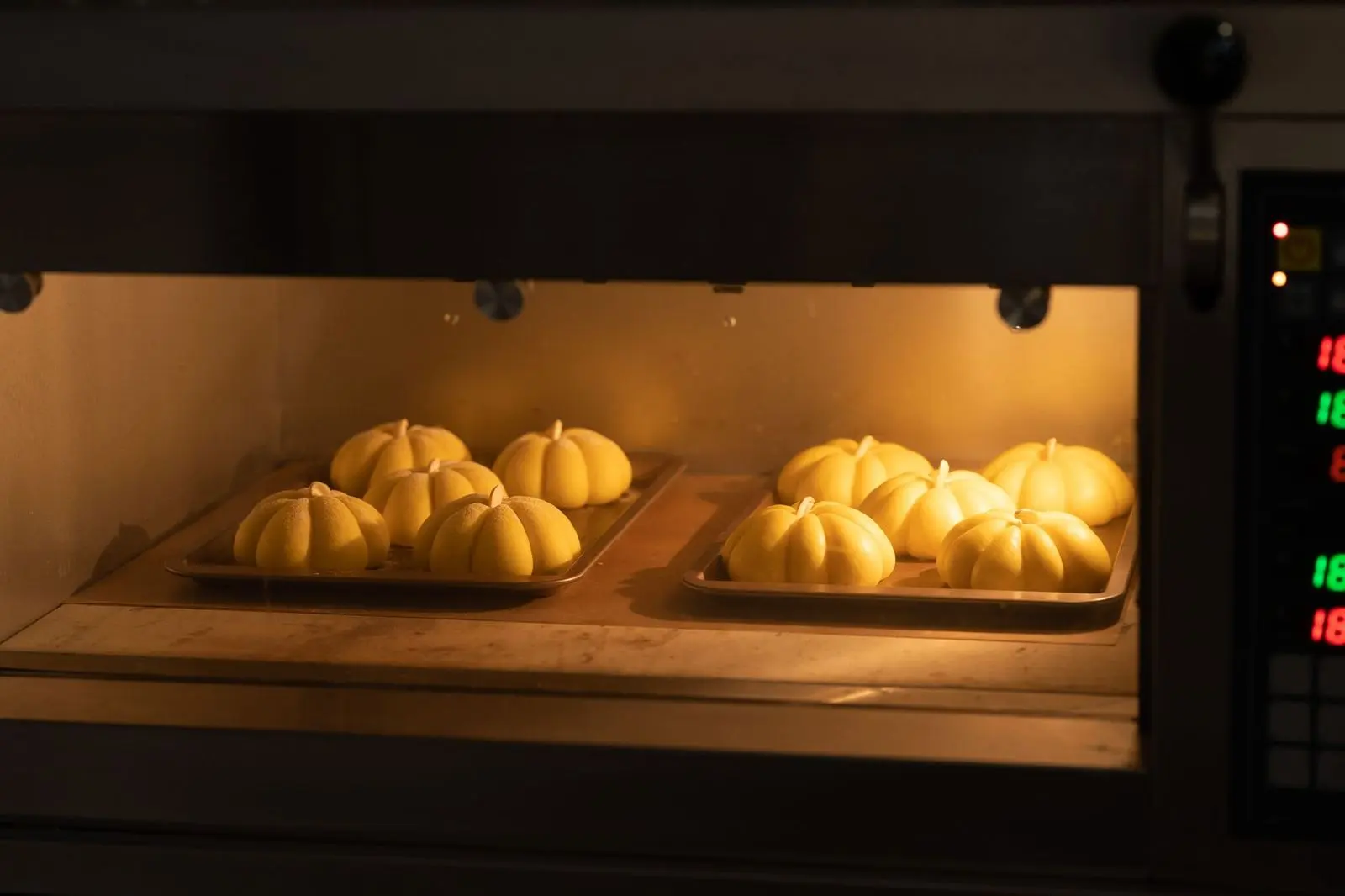
Got a recipe in Fahrenheit but an oven that shows Celsius, fan or gas marks? Oven temperature conversion only needs one chart and one fan rule: look up your setting, then lower it for a fan oven.
This guide is part of our baking for beginners series, and it focuses on the oven settings you need to read a recipe correctly.
| Item | Value |
|---|---|
| Gas mark 4 | 180°C |
| Gas mark 6 | 200°C |
| Typical fan oven adjustment | About 20°C lower than conventional |
| Oven thermometer wait time | At least 10 minutes in each spot |
| Largest overshoot reported in testing | More than 40°C above the set temperature |
These figures come from Which? and Baking Like a Chef, and they can change, so check the source before you rely on them.
Oven temperature conversion chart
The table below follows the Which? conversion chart, which lines up gas mark, Fahrenheit, Celsius and fan settings for the temperatures bakers meet most often.
| Gas mark | Fahrenheit | Celsius | Fan | Description |
|---|---|---|---|---|
| Gas mark 1 | 275°F | 140°C | 120°C | Cool |
| Gas mark 2 | 300°F | 150°C | 130°C | Cool |
| Gas mark 3 | 325°F | 160°C | 140°C | Moderate |
| Gas mark 4 | 350°F | 180°C | 160°C | Moderate |
| Gas mark 5 | 375°F | 190°C | 170°C | Moderately hot |
| Gas mark 6 | 400°F | 200°C | 180°C | Moderately hot |
| Gas mark 7 | 425°F | 220°C | 200°C | Hot |
| Gas mark 8 | 450°F | 230°C | 210°C | Hot |
| Gas mark 9 | 475°F | 240°C | 220°C | Very hot |
The chart is taken from the Which? oven temperature conversion table, and its row for 350°F matches the figures in Baking Like a Chef; check the sources if a setting looks wrong for your oven.
Find the column that matches your recipe, then read across to the column that matches your own dial. The gas mark scale is used on gas cookers and gas ovens in the UK, Ireland and some Commonwealth countries, according to Which?.
Settings below gas mark one are written as fractions rather than zero, according to Baking Like a Chef, so the lowest fractional marks sit outside the chart above.
Converting Celsius, Fahrenheit and gas mark by formula
If a recipe uses a temperature that isn’t on the chart, Baking Like a Chef gives two formulas: °C = (°F – 32) × 5/9 and °F = (°C × 9/5) + 32. Use the first to go from Fahrenheit to Celsius and the second for the reverse.
Take 220°C as a worked example. Multiply by 1.8 and add 32 to reach 428°F, which the same source rounds up to 430°F for everyday use.
A reliable routine for any recipe:
- Note the unit your recipe uses and the unit your oven shows.
- Find the matching row in the chart, or use a formula for a temperature that isn’t listed.
- Lower the setting if you have a fan oven and the recipe was written for a conventional one.
- Confirm the oven really reaches that temperature with a thermometer.
How do you adjust for a fan oven?
Fan oven settings are typically around 20°C less than conventional ones, because the fan circulates hot air around the oven and into the food, according to Which?. The same page warns that skipping this adjustment can make the outside of food cook too quickly.
Some recipes print two temperatures: a hotter one for traditional ovens and a cooler one for fans. If yours does, pick the number that matches your oven type and ignore the other.
Baking Like a Chef offers a rule for Fahrenheit recipes: reduce the temperature by 25°F or reduce the cooking time by 25%. For a fan-assisted gas oven, it says to drop one gas mark.
Fan circulation can turn baked goods golden quickly while the middle is still raw, so test for doneness rather than trusting colour alone. The same source suggests checking your manufacturer’s handbook or website for the recommended fan temperature.
How to check your oven is accurate
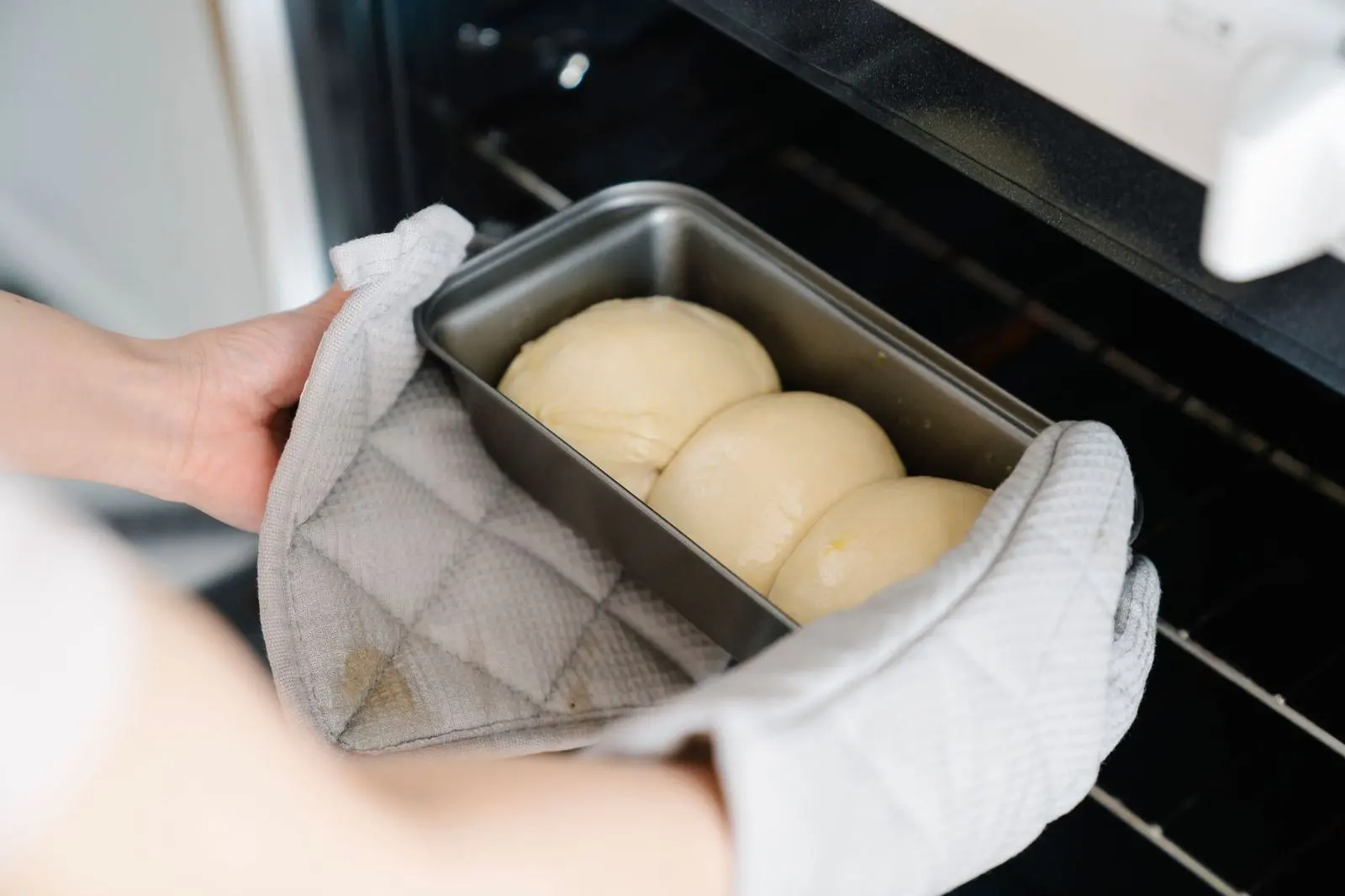
A conversion only helps if the oven delivers the number you set. Which? reports ovens that soared to 220°C when set at 180°C, and one that measured just 150°C in part of the oven at the same setting.
Its testing also found some ovens running more than 40°C above the set temperature, so a separate thermometer is worth having. Follow these steps:
- Use a separate stainless steel oven thermometer, which Which? calls the best way to verify your oven’s accuracy.
- Place it in different areas of the oven to find hot or cold spots.
- Leave it in each area for at least 10 minutes before checking for changes, as advised by Which?.
What the wrong temperature does to a bake
Which? baked four Victoria sponges from one recipe, ranging from 20°C under the recommended temperature to 40°C too hot. It found that even a 20°C difference can have a marked effect on a cake’s appearance and texture.
- Too hot: moisture evaporates too rapidly from the surface, and the cake may be burnt at the edges before the inside is cooked through.
- Too cool: the rise is less, so you end up with a denser, less airy sponge.
If a cake has already sunk, our guide on why does my cake sink in the middle is a useful next read.
Once the temperature is right, Which? lists a few habits that protect a bake:
- Keep the door shut, since opening it can spell disaster for soufflés and delicate sponges.
- Avoid overfilling the oven, because cooking on more than two levels risks poorer results.
- Loosely cover cakes or pastries with foil if they brown before they cook in the middle.
- Measure ingredients carefully and stick to the ratios of butter, sugar and flour.
If pastry is your next bake, our guide on how to make shortcrust pastry pairs well with this chart.
Frequently asked questions
What gas mark is 180°C?
Show answer
On the Which? chart, 180°C corresponds to gas mark 4, while 200°C is gas mark 6. Baking Like a Chef calls 350°F the most common setting and equates it to 180°C.
What if my recipe gives only one temperature?
Show answer
Because most ovens are fan assisted these days, Which? says a single figure usually refers to a fan oven. It still advises double-checking the recipe.
Does a few degrees of error matter?
Show answer
A small gap is manageable. Which? says you can adapt to an oven that averages a handful of degrees off by turning it up or down a little, but a larger gap or heavy fluctuation can ruin results.
Can I round a converted temperature?
Show answer
Yes. Baking Like a Chef notes that its conversions are not rounded and says rounding to the nearest degree makes very little difference to a recipe’s results.