
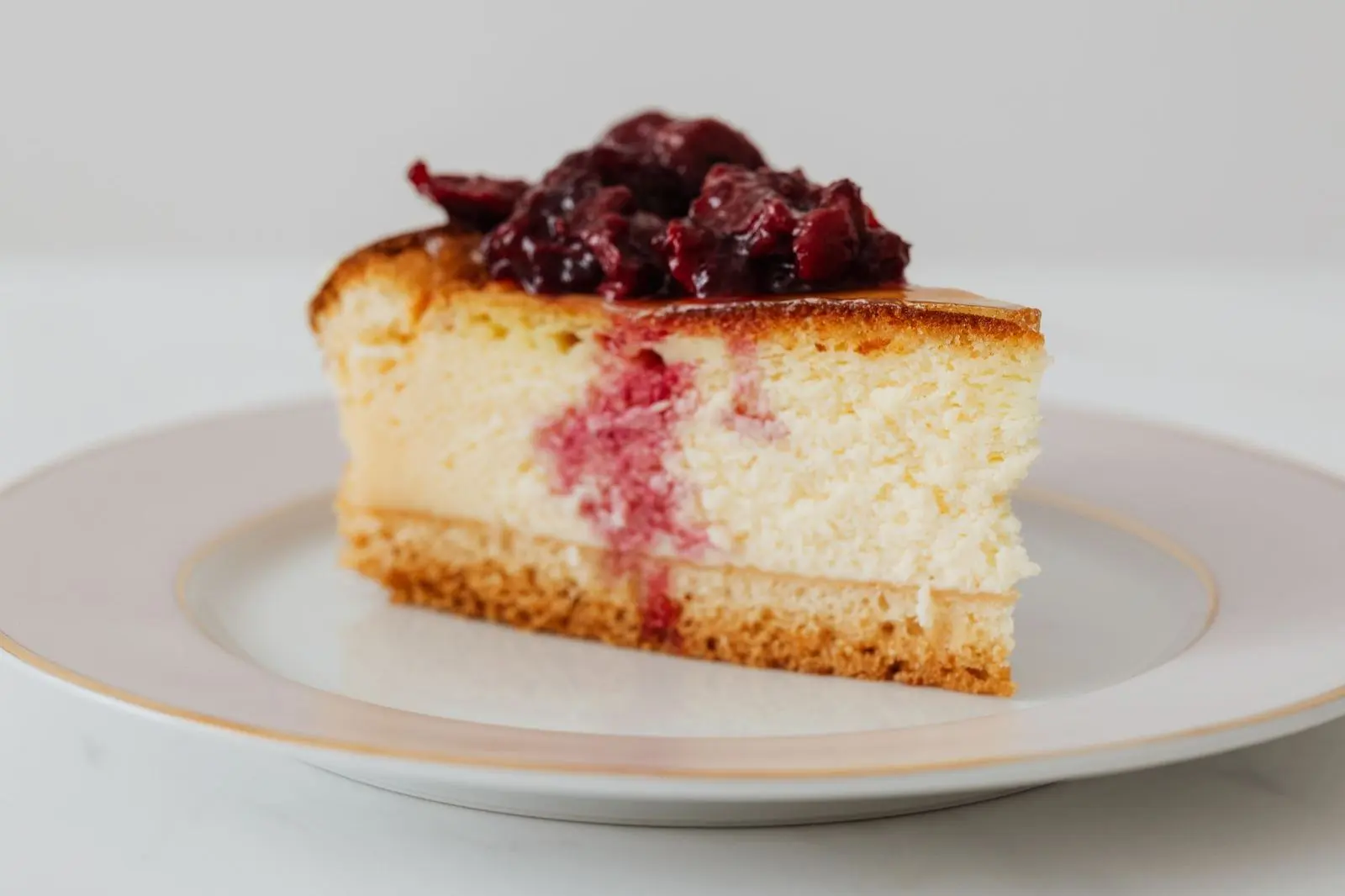
Worried your cheesecake will split down the middle? Here’s how to make cheesecake without cracking: avoid overbaking, use a water bath, grease the pan, and loosen the edges after baking.
For more bakes in the same spirit, browse the easy dessert recipes collection on this site.
| Item | Value |
|---|---|
| Biggest cause of cracking | Overbaking |
| Main reasons cakes crack (Taste of Home) | Two: overbaked and dry, or pulling as the cake cools |
| Oven rack position | One rung below the middle |
| Water bath | Used on every Taste of Home Test Kitchen cheesecake |
| Cooling before loosening the edge | About ten minutes |
| Doneness check | Slight wobble, moving as a whole |
The figures above come from King Arthur Baking and Taste of Home. Guidance can change, so check the sources before you rely on it.
Why cheesecakes crack
According to Taste of Home, there are two main reasons cakes crack. The first is that they are overbaked and dry, and the second is that they split as they cool.
Taste of Home spoke with Catherine Ward, its prep kitchen manager and an expert cheesecake baker, about the causes. She points out that dry cakes lack the moisture needed to hold together in a single piece.
King Arthur Baking agrees that overbaking is one of the biggest causes of cracking and will almost certainly lead to a crack. Its writers add that a cheesecake can crack either while it bakes or afterward, as described on its baking trials page.
The cooling crack has a simple mechanism. A cheesecake contracts as it cools, and if part of it is stuck to the side of the pan, that part can pull on the cake and leave a gash.
Mix gently and grease the pan
Two steps happen before the cheesecake ever reaches the oven. Both are about reducing stress on the finished cake, as Taste of Home’s guide explains.
- Grease the pan. The Test Kitchen advice is to do this even with a nonstick pan, because anything clinging to the edge can tear the cake as it shrinks.
- Add the eggs last. Beat them only until just combined, not longer.
- Keep air out. The more air in the batter, the more the cheesecake is likely to expand, contract and then crack.
Eggs are the step to watch. The more you mix them into the batter, the more air you incorporate, so a short, gentle final mix is the goal.
Use a water bath and lower the rack
Taste of Home’s Test Kitchen uses a water bath on every cheesecake, even when the recipe does not call for one. To make it, you need a high-sided pan and hot water, according to the same article.
- Wrap the outside of the cake pan in foil, even if the pan is labelled leak-proof.
- Set the cake pan inside the larger high-sided pan.
- Fill the larger pan with boiling water.
- Bake as normal.
The water helps the cake bake more evenly and, in Catherine’s words, provides a moist atmosphere that keeps it from drying out and cracking.
Position matters too. Cracks can appear when the top of the cake bakes too quickly, so Taste of Home suggests moving the cheesecake one rung below the middle of the oven rather than all the way to the bottom.
How to tell when a cheesecake is done
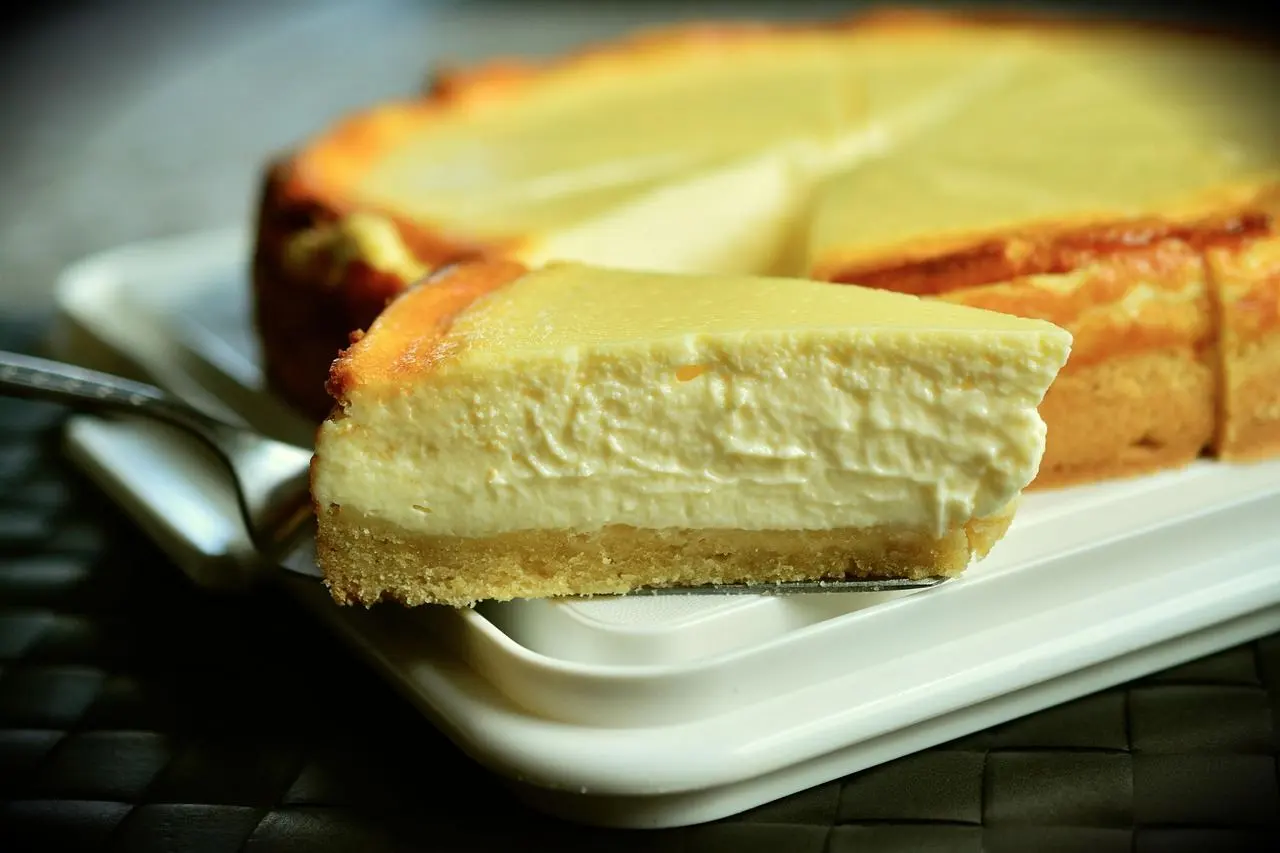
It is tempting to bake a cheesecake until the middle is firm, as you would a sponge. Catherine Ward warns that once the center is set, the cake is already overbaked, and overbaked cheesecakes are liable to crack, per Taste of Home.
The wobble test is the alternative. Tap the side of the springform pan with a wooden spoon: if the cake ripples, it is not ready, but if it wobbles slightly and moves as a whole, it is done.
Timing alone is a weaker safeguard. King Arthur Baking describes baking a cheesecake like any other cake as a method that needs an accurately calibrated oven and a very watchful eye, and says that avoiding cracks this way demands exquisite timing. Its trial lists that approach first in a ranking ordered from least to most effective, according to King Arthur Baking.
Cooling, and what to do if it cracks anyway
Once the cheesecake is out of the oven, let it cool for about ten minutes. Then run a dull knife around the inside edge of the pan so that nothing sticks to the rim and splits the cake, as Taste of Home advises.
If a crack still appears, it cannot really be mended. The good news is that it is easy to disguise.
- Fresh whipped cream, which is Catherine’s recommendation.
- Fresh fruit.
- Homemade chocolate ganache.
Looking for another bake to try next? The victoria sponge recipe and the millionaire’s shortbread recipe on this site are two places to go.
Frequently asked questions
Can you fix a cheesecake that has already cracked?
Show answer
Not really, since the split stays once it forms. You can hide it under a topping such as whipped cream, fruit or ganache.
Do you really need a water bath?
Show answer
Taste of Home’s Test Kitchen treats it as standard for every cheesecake it makes. The steam-rich environment keeps the surface from drying out, and the gentler heat cooks the cake more evenly.
Is a cheesecake ready when the middle feels firm?
Show answer
No. A firm center signals that the cake has gone too far. Look for a slight, whole-cake wobble when you tap the pan instead.
Why does a cheesecake crack after leaving the oven?
Show answer
As it cools, the cake shrinks. If any part is gripping the pan wall, the shrinking tugs it apart, so greasing the pan and loosening the edge with a knife both help.