
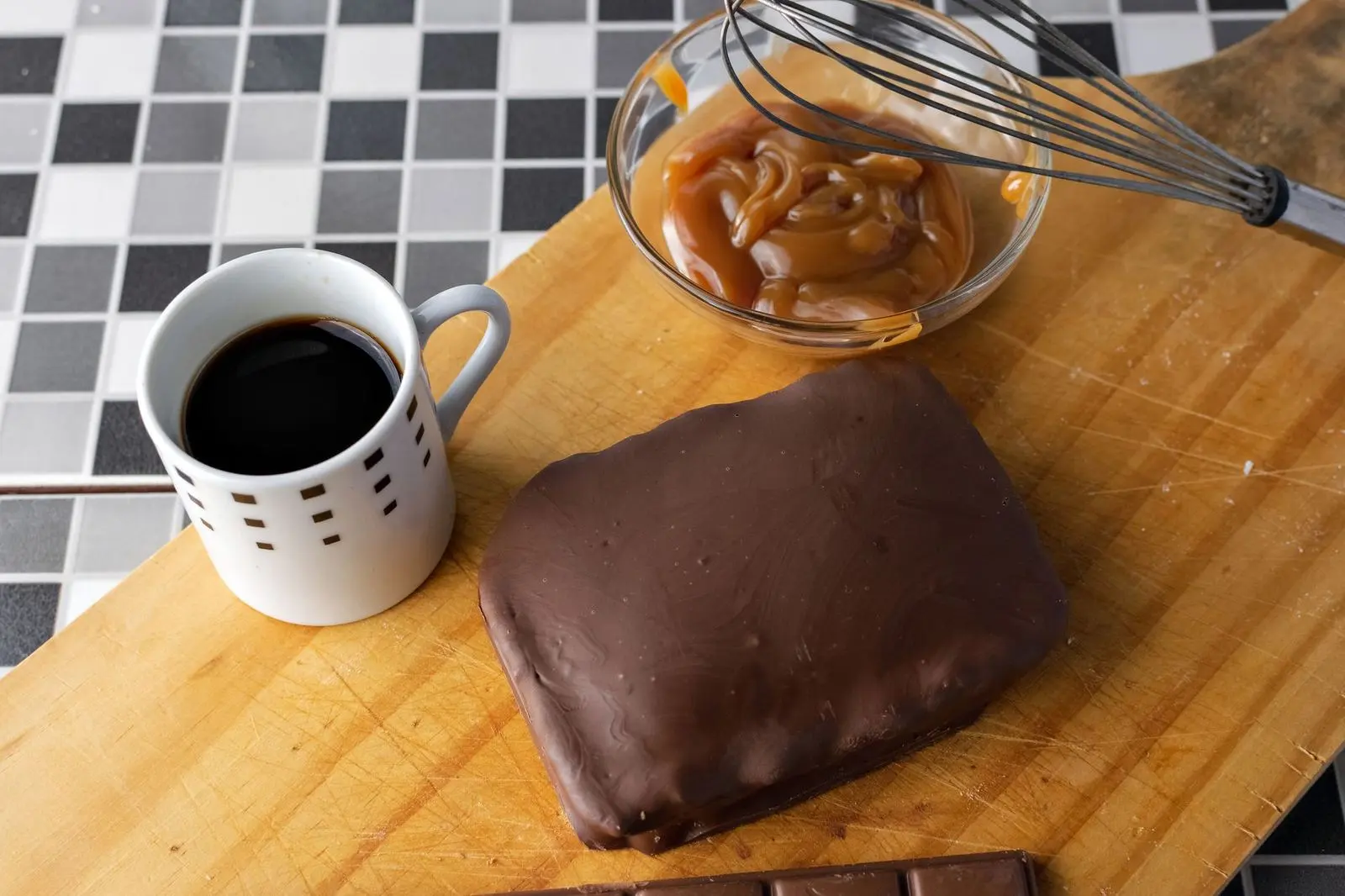
Want a millionaire’s shortbread recipe that gives clean slices and caramel that sets? You need a sturdy shortbread base, caramel cooked just long enough, and a chocolate top softened with butter so it cuts without cracking.
If you like bakes with simple, separate steps, you can browse more easy dessert recipes after this one.
| Item | Value |
|---|---|
| Yield | 32 bars (1×2-inch) |
| Chill time | 5 to 6 hours |
| Freezer storage | Up to 3 months |
| Shortbread ratio by weight | 3 parts flour, 2 parts butter, 1 part sugar |
| Caramel cooking time (condensed-milk method) | 8-12 minutes |
| Rest before cutting | About 15 minutes |
These figures come from Scotch & Scones and Something Sweet Something Savoury. Times and yields can change with your pan and your stove, so check the source before you rely on them.
What makes up millionaire’s shortbread
Millionaire’s shortbread, also called caramel shortbread, is a British dessert made of a shortbread base, caramel filling and chocolate topping, as described by Scotch & Scones. The same page lists three layers: the shortbread, a vanilla salted caramel and a chocolate ganache, all built from basic pantry staples.
It is a three-step process, and the steps are not equally hard. The shortbread and the topping are quick, while the caramel is where most bakers run into trouble.
- Base: butter, sugar and flour, baked and left to cool.
- Filling: a caramel that has to be firm enough to slice.
- Topping: melted chocolate, sometimes softened with butter.
Getting the shortbread base right
A common starting point is a ratio of 3 parts flour, 2 parts butter and 1 part sugar by weight, which Scotch & Scones mentions for traditional shortbread. That recipe then uses a little less flour than the ratio suggests, so the base is not too crumbly yet still holds up the layers above it.
Because flour is the easiest ingredient to over-measure, a kitchen scale helps. Too much flour gives a dry dough and a crumblier base.
For the sugar, Something Sweet Something Savoury prefers caster sugar because its finer grains dissolve into the butter much quicker than regular granulated sugar. The same page says to line the tin so the paper rises a few centimetres above the rim, which lets you lift the whole slab out later.
Take care not to over bake. The shortbread may look a little underdone when it leaves the oven, but it firms up as it cools.
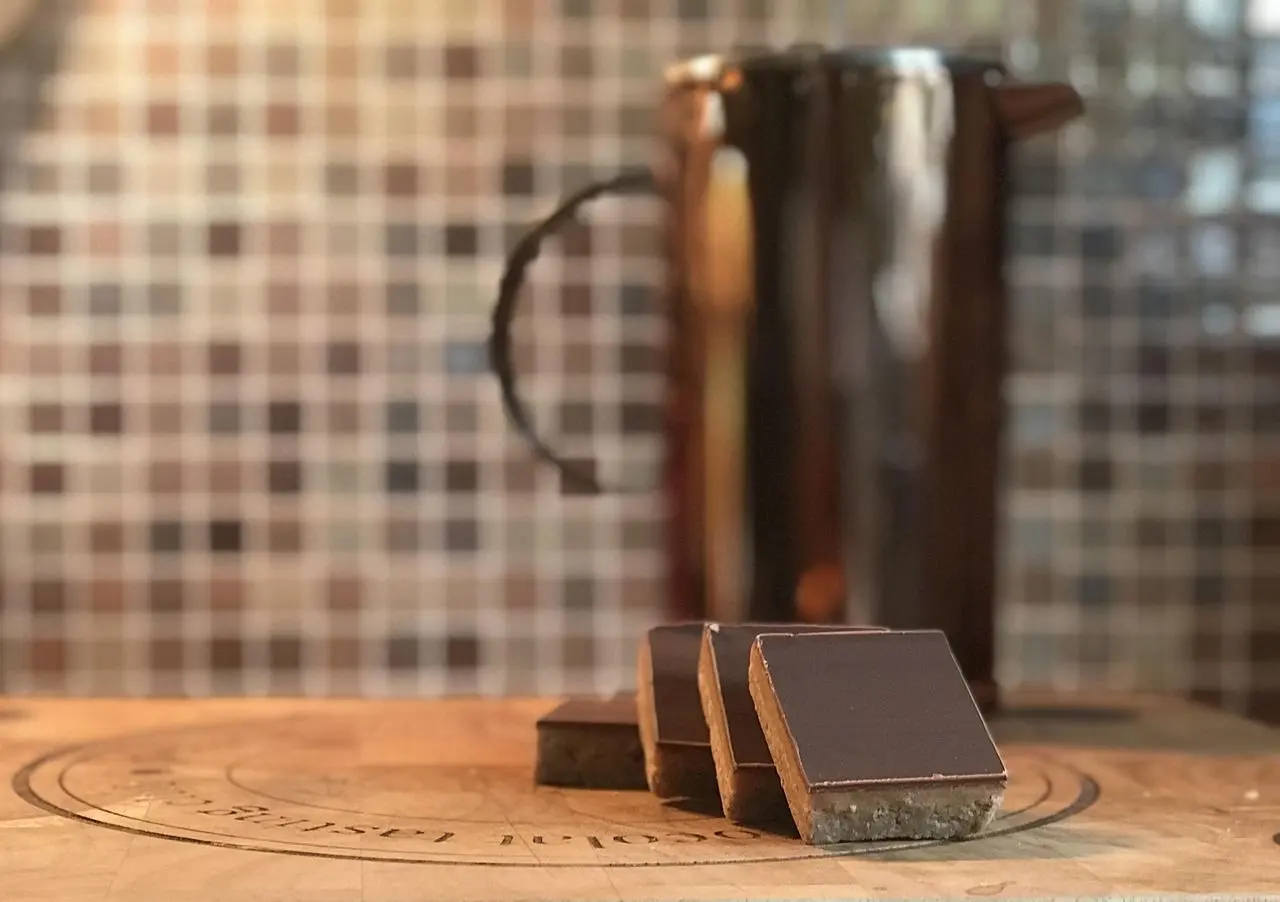
Two ways to make the caramel
The from-scratch route uses sugar, heavy cream and butter. According to Scotch & Scones, that caramel is cooked to the soft-ball stage, when the syrup has some cohesion but stays soft, like fudge.
The same page notes there are six stages in candy making:
- thread
- soft-ball
- firm-ball
- hard-ball
- soft-crack
- hard-crack
Many other recipes lean on sweetened condensed milk, but the same source points out that this takes away your say over how sweet the caramel turns out. Cooking from scratch gives you that control, at the cost of a few extra steps.
The condensed-milk route is simpler, and Something Sweet Something Savoury says it typically takes between 8-12 minutes, though an exact time is hard to give because pans and heat sources differ. Its method runs like this:
- Put condensed milk, sugar, butter and golden syrup in a medium heavy-based pan over a medium heat.
- Stir occasionally until the sugar has fully dissolved, because undissolved sugar leaves the caramel grainy.
- Raise the heat slightly, bring to the boil and stir constantly until the caramel darkens and begins to thicken.
- Take the pan off the heat straight away and pour the caramel over the cooled shortbread.
Topping, chilling and cutting clean bars
For the top, Something Sweet Something Savoury suggests pouring the melted chocolate over the set caramel and tilting the pan to ease it into the corners. It also recommends a couple of hours in the fridge for the caramel layer to set.
In the ganache version from Scotch & Scones, butter replaces cream so the chocolate softens enough not to turn brittle when cut or bitten. That recipe lists a chill time of 5 to 6 hours across the layers, so plan the bake well ahead of when you want to serve it.
Cutting is where a good bake can still go wrong. Something Sweet Something Savoury advises leaving the tray on the counter for about 15 minutes after chilling, using a large sharp knife that is not serrated, and pressing straight down rather than sawing.
If you want another dessert where a clean, unbroken surface matters, see this guide on how to make cheesecake without cracking.
Troubleshooting caramel and chocolate
Most problems trace back to timing or temperature. These are the fixes the two sources give:
- Caramel like toffee: it was boiled for too long, and Something Sweet Something Savoury says it cannot be rescued, so cook it for less time on the next attempt.
- Caramel too runny: it was not boiled for long enough. Extra time in the fridge may firm it, though neat slices may not be possible.
- Cracking chocolate: let the bars warm slightly before cutting. If that does not help, the same page suggests melting about 50g of butter into the chocolate to soften it.
- White dots on the chocolate: this is bloom. The page says the chocolate became too hot when it was melted, and that storing the bars in the fridge should prevent it.
- Ready-made tinned caramel: it works, but its looser consistency means the caramel can ooze out when you cut.
The bake rewards patience more than speed, so give each layer time to cool before adding the next.
Storage and make-ahead
According to Scotch & Scones, the bars are freezer-friendly for up to 3 months. The layers can also be made over 2 to 3 days, which spreads the work out if you are baking for a gathering.
When the bars are done and you fancy something frosted next, the guide on how to make buttercream is a good place to look.
Frequently asked questions
Can I make millionaire’s shortbread gluten-free?
Show answer
The Scotch & Scones recipe says to swap in a one-to-one gluten-free all-purpose flour in the same amount as the regular flour. See the recipe page for the full base.
Can evaporated milk replace condensed milk?
Show answer
No. Something Sweet Something Savoury warns that the two are different products and that evaporated milk gives a completely different, unwanted result.
Should the butter be salted or unsalted?
Show answer
Many recipes call for unsalted, but one source prefers salted for the added flavour. Either way, the same source insists on real butter rather than margarine, as noted at Something Sweet Something Savoury.
What chocolate works best on top?
Show answer
Pick a chocolate you enjoy eating, since that flavour carries the topping. The source above likes milk chocolate on caramel shortbread but accepts dark as an alternative.