
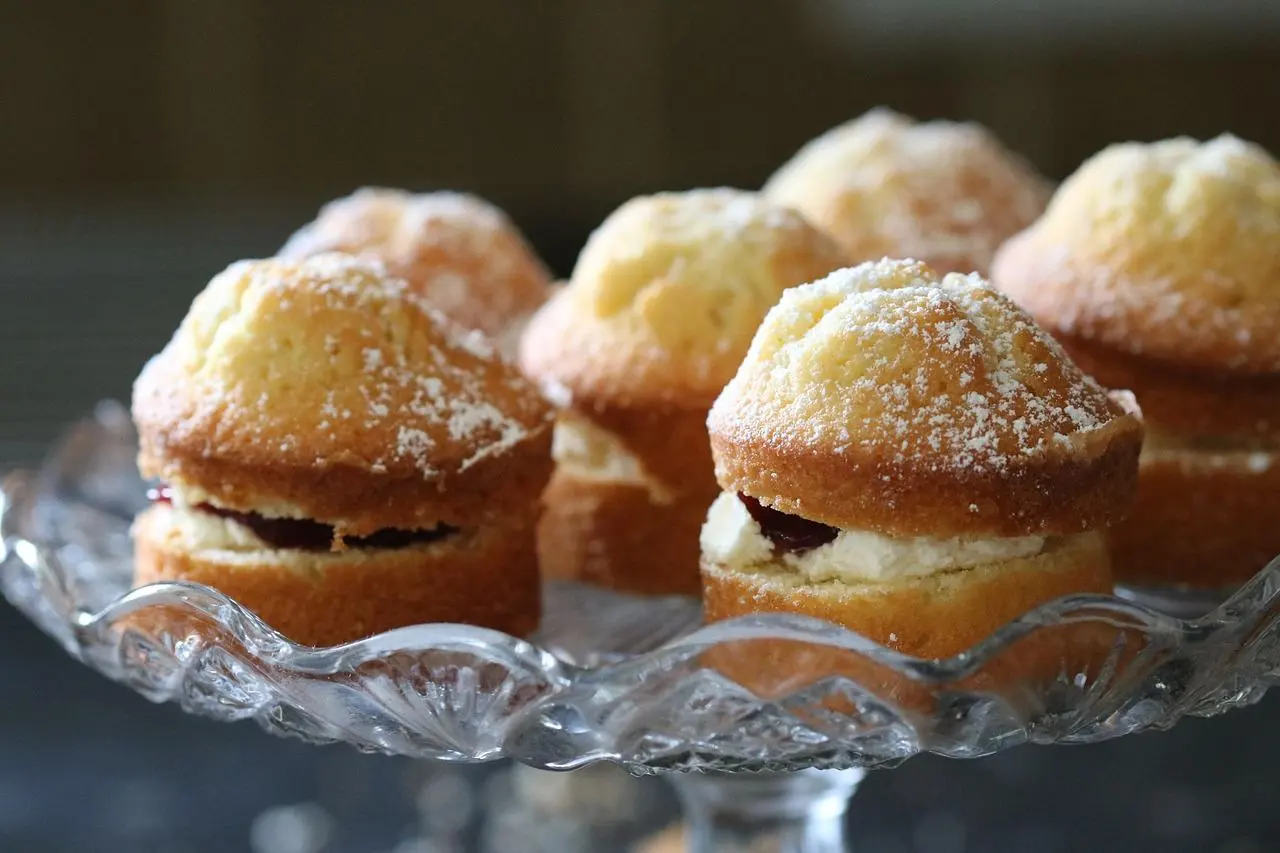
Wanting a victoria sponge recipe that doesn’t turn out dense or dry? Use the all-in-one method: beat equal weights of spread, sugar, eggs and flour for about 2 minutes, then bake in two sandwich tins.
Once this classic is sorted, you can find more simple bakes among our easy dessert recipes.
| Item | Detail |
|---|---|
| Oven temperature | 180°C (160°C fan, Gas 4) |
| Tins | Two 20cm (8in) deep loose-bottomed sandwich tins |
| Main ingredients | 225g (8oz) each of baking spread, caster sugar and self-raising flour, plus 4 eggs |
| Mixing time | About 2 minutes with an electric whisk |
| Bake time | About 25 minutes |
| Make-ahead window | Up to 8 hours |
These figures come from Mary Berry’s published Victoria sponge sandwich recipe. Recipes and times can change, so check the source before you rely on them.
What goes into a classic Victoria sponge
A Victoria sponge rests on equal weights of fat, sugar and flour, with eggs to bind them. Mary Berry’s recipe uses 225g (8oz) each of baking spread, caster sugar and self-raising flour, with 4 eggs and 1 level tsp baking powder.
The filling is simple. The same page lists strawberry jam and whipped pouring double cream, with a little caster sugar to sprinkle on top. The Happy Foodie’s version asks for about 4 tbsp strawberry jam and 150ml cream, so check the exact amounts against your chosen recipe.
On jam, GoodtoKnow’s write-up of the recipe says the cake is filled with your choice of strawberry or raspberry. The same publisher’s other Victoria sponge page describes the cake as one said to have been a favourite of Queen Victoria.
Gather this kit before you start:
- Two deep, loose-bottomed sandwich tins and non-stick baking paper
- A large bowl or freestanding mixer, plus an electric whisk
- A palette knife for freeing the sides of the cakes
- A wire rack for cooling
The all-in-one method, step by step
Mary Berry’s page says the all-in-one method makes this one of the simplest cakes to make, as you skip the separate creaming stage (source). The steps below follow that page.
- Preheat the oven to 180°C (160°C fan, Gas 4). Lightly grease two 20cm (8in) tins and line the bases with non-stick baking paper (source).
- Put the sponge ingredients into the bowl and beat for about 2 minutes until smooth and lighter in colour. The time varies with the efficiency of your mixer (source).
- Divide the mixture between the tins and level the tops.
- Bake for about 25 minutes, until the cakes are well risen, golden and shrinking away from the sides of the tins (source).
- Cool the cakes in the tins for a few moments, then run a palette knife around the edges. Turn them out, peel off the paper and cool completely on a wire rack.
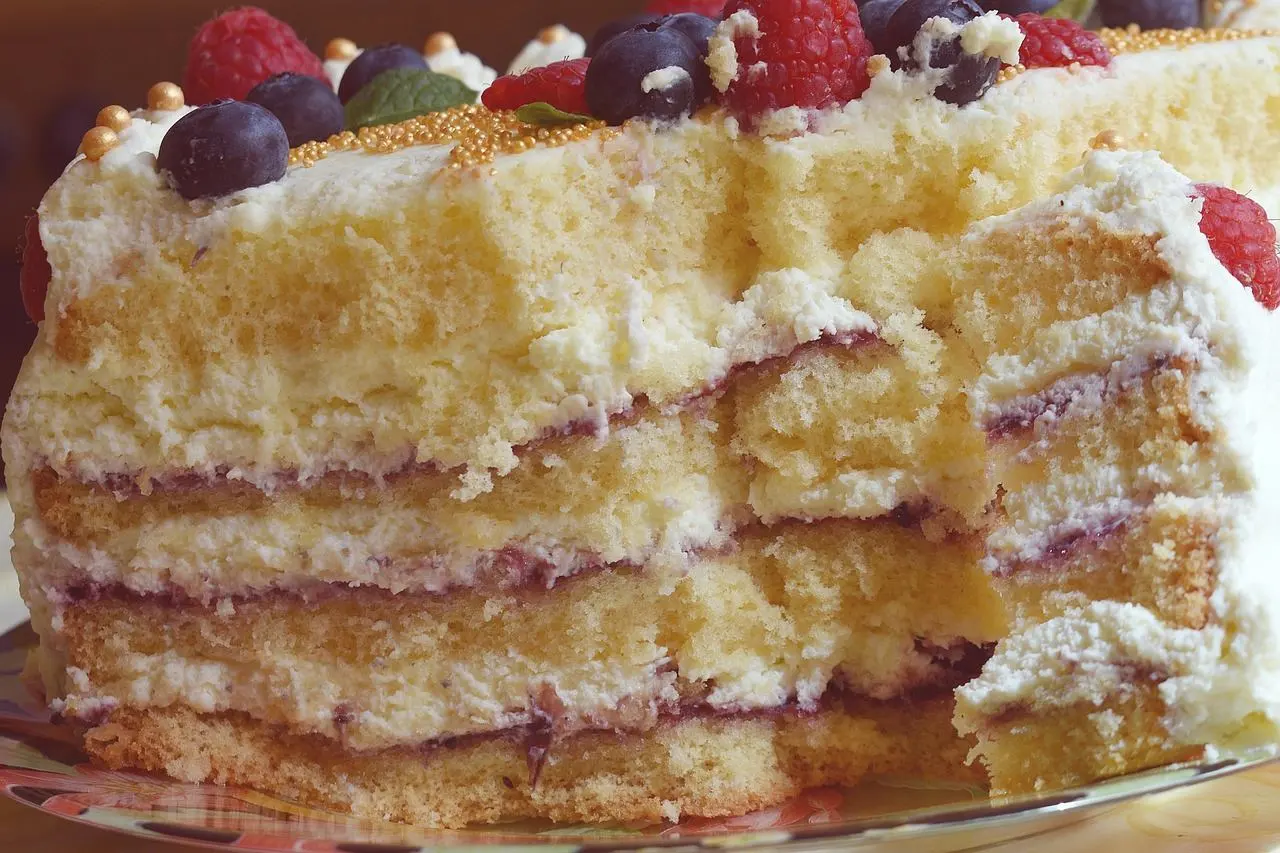
- Spread jam on the underside of the cake with the best top. Set the other cake top downwards on a plate, cover it with whipped cream, then sit the jam-topped cake on it with the jam touching the cream.
- Sprinkle with caster sugar and slice.
Choosing the cake with the best top for the lid is the whole trick to a neat finish, since there is no icing to hide anything.
How do you know the sponge is done?
Rely on the signs rather than the clock alone. According to Mary Berry’s page, look for these:
- The cakes are well risen and golden.
- The edges are shrinking away from the sides of the tins.
- The tops spring back when pressed lightly with a finger.
Ovens and tins differ, and The Happy Foodie gives a wider bake range of about 25-35 minutes for the same cake. For a second check, GoodtoKnow says a skewer should come out clean with a few crumbs and no raw batter.
Common problems and how to fix them
A dense or uneven crumb
Accuracy matters here. Lovefood warns that you must be precise with your weighing, because there is no icing to cover any mistakes. GoodtoKnow suggests an easy way to scale a recipe: weigh the eggs, then use that same weight for the sugar, butter and flour.
Holes in the sponge or a split batter
Mixing too long is the usual suspect. GoodtoKnow says over-mixing can make the mixture separate or create too many air pockets, leaving holes after baking. Beat only until the batter is smooth.
An uneven bake
Published advice differs on temperature. Mary Berry’s page says to keep the baking spread in the fridge until needed (source). GoodtoKnow’s other recipe suggests room-temperature ingredients, especially eggs, so the yolks and whites combine more easily for an even bake (source).
Cakes stuck in the tins
Grease properly even if your tins are non-stick. GoodtoKnow says proper greasing lets the cake slide out gently, and running a knife around the edge helps loosen it. Wipe away any excess grease, as it can make the outside burn.
Scaling, freezing and what to bake next
For a smaller cake, GoodtoKnow lists quantities for two 18cm (7 in) tins: 3 large eggs and 175g (6oz) each of butter, caster sugar and self-raising flour. Check the page for the baking powder amount and timing.
Plain cooked sponges freeze well, according to Mary Berry’s tips. GoodtoKnow says unfilled cakes can be packed in freezer bags and frozen for up to 3 months, and should be defrosted before filling.
When you want a different simple cake, our lemon drizzle cake recipe is a natural next step. If you fancy something creamier, our guide on how to make cheesecake without cracking is worth a read.
Frequently asked questions
Can I use butter instead of baking spread?
Show answer
Yes. Mary Berry notes that soft butter could be used, though she finds the spread gives a lighter rise (source). GoodtoKnow adds that butter can taste better if it is soft rather than greasy, and that any spread should have a high fat content, ideally 75 per cent or higher.
Do I need to cream the butter and sugar first?
Show answer
Not with an electric whisk. GoodtoKnow says its all-in-one version still gets air into the mix that way, and recommends the creaming method only if you have no electric mixer.
How should I store a finished Victoria sponge?
Show answer
GoodtoKnow says an airtight container keeps it for up to three days and that the fridge may dry it out faster. Mary Berry’s tip for the cream-filled cake is to keep it wrapped in the fridge and serve it at room temperature (source).