
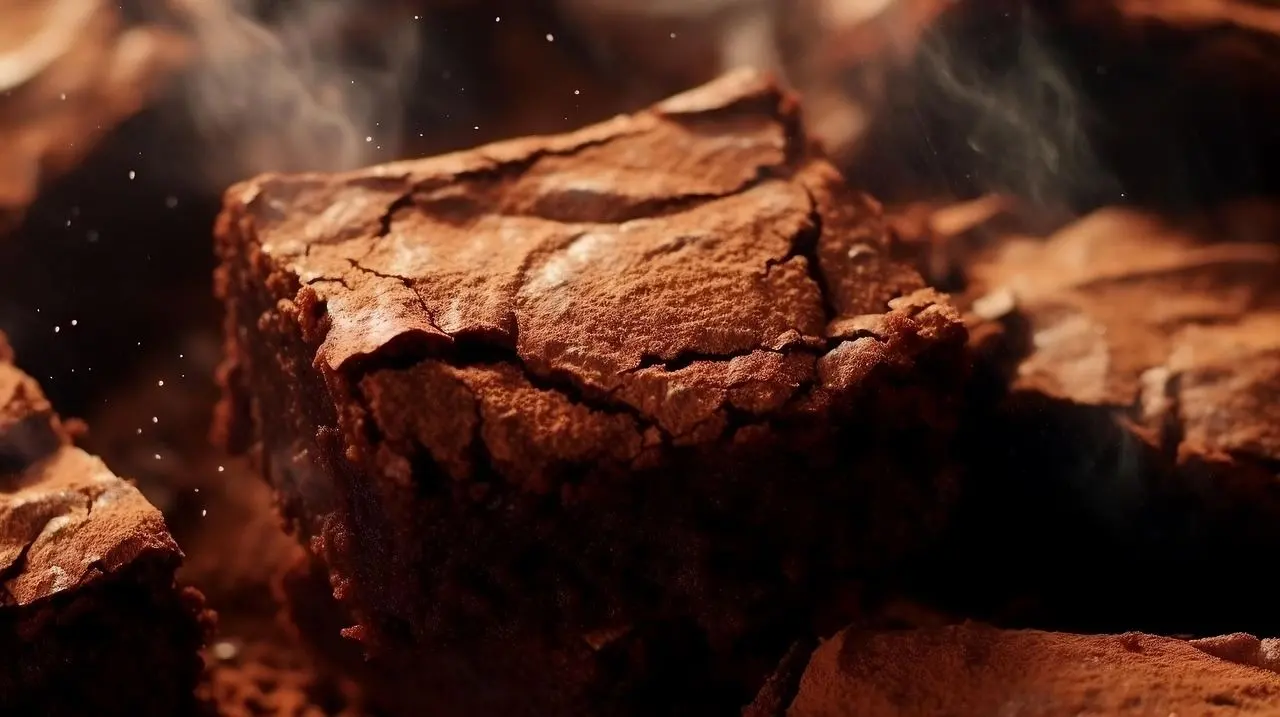
Worried your brownies will turn out cakey instead of dense? Use this fudgy brownies recipe approach: more fat, less flour, melted chocolate, no leavening, and a gentle mix. Pull them while the center is still slightly moist.
For more simple sweets, browse these easy dessert recipes on the site.
| Item | Value |
|---|---|
| Oven temperature | 350ºF (177ºC) |
| Bake time | about 30 minutes |
| Pieces when sliced | 16 pieces |
| Room-temperature storage | up to 5 days |
| Freezer storage | up to 1 month |
These figures come from Jessica Gavin’s fudgy brownie recipe. Recipes get revised, so check the source before you rely on them.
How fat, flour and eggs set the texture
Popular Science quotes Dr. Lesa Tran, a chemistry professor at Rice University, who says the ratios between ingredients decide whether a brownie turns out fudgy, cakey or chewy, as explained in its brownie science piece. Her fudgy formula is short:
- Less flour and more fat.
- More egg yolks.
- Melted chocolate rather than cocoa powder alone.
- No leavening agents.
- A light mix and a slightly underbaked center.
The Daily Meal reports food scientist Sarah Visintainer of Half Batch Baking making a similar point: a higher fat-to-sugar ratio, less flour and a low baking temperature, as covered in that article. Her version also calls for fewer eggs, whereas Tran’s calls for more yolks, so treat the egg count as a variable to adjust rather than a fixed rule.
The same Popular Science piece gives the opposite recipes for contrast. A cakey brownie uses more flour, less fat, more egg whites, cocoa powder and a leavening agent, and it is baked until fully set. A chewy one leans on brown sugar and fat.
The ingredients, one by one
Flour and gluten
Flour proteins link up with water to form gluten, and the more flour you add and the more you mix it, the stronger that network becomes, according to Popular Science. Gavin’s recipe uses only a small amount of all-purpose flour, enough to hold the bars together for slicing, as described on her recipe page.
Sugar
Sugar locks in moisture by binding to water, which keeps brownies soft. Dissolved sugar also rises to the surface and re-forms into crystals, which is the origin of the shiny, crackly crust, per Popular Science.
Fat and eggs
Tran’s rule is simple: more fat gives a richer, fudgier brownie, and egg yolks contribute some of that fat (Popular Science). In Gavin’s version, butter coats the flour, which helps limit gluten formation, as laid out in her ingredient notes.
Chocolate
Melted chocolate contains cocoa butter, which solidifies as it cools and gives a dense, fudgy bite, while cocoa powder has less fat and produces a lighter, drier crumb, says Popular Science. The Daily Meal’s source suggests ideally combining cocoa powder and melted chocolate (The Daily Meal), and Gavin’s recipe uses bittersweet chocolate, unsweetened chocolate and cocoa powder (Jessica Gavin).
If you choose cocoa powder, natural cocoa is more acidic and sharper, while Dutch-processed cocoa is smoother and mellower. That difference is worth checking on the label before you swap one for the other.
Leavening
Baking soda or baking powder introduces air into the batter and gives lift and a cakier texture, so skipping leavening is part of the fudgy formula, per Popular Science.
A sourced fudgy brownies method, step by step
The sequence below follows the steps on Jessica Gavin’s page. The exact ingredient amounts sit on the recipe card there, which lists US and metric measurements, so use that card for quantities (source).
- Heat the oven to 350ºF (177ºC) with the rack in the middle, and line the pan with greased foil so the brownies can be lifted out later (Jessica Gavin).
- Melt the chocolate in the microwave on low power, or over a double boiler, and combine it with the butter until smooth and glossy. Keep the liquid below 120ºF (49ºC) to prevent flavor loss (Jessica Gavin).
- Whisk the cocoa powder into the warm chocolate so it hydrates and blooms, then cool the mixture below 95ºF so it does not scramble the eggs (Jessica Gavin).
- Whisk the eggs with sugar, vanilla and salt until the sugar dissolves, then add the cooled chocolate gradually.
- Fold in the flour gently, and stop as soon as it is combined.
- Spread the batter in the pan and bake for about 30 minutes, until a toothpick in the center comes out with a few moist crumbs.
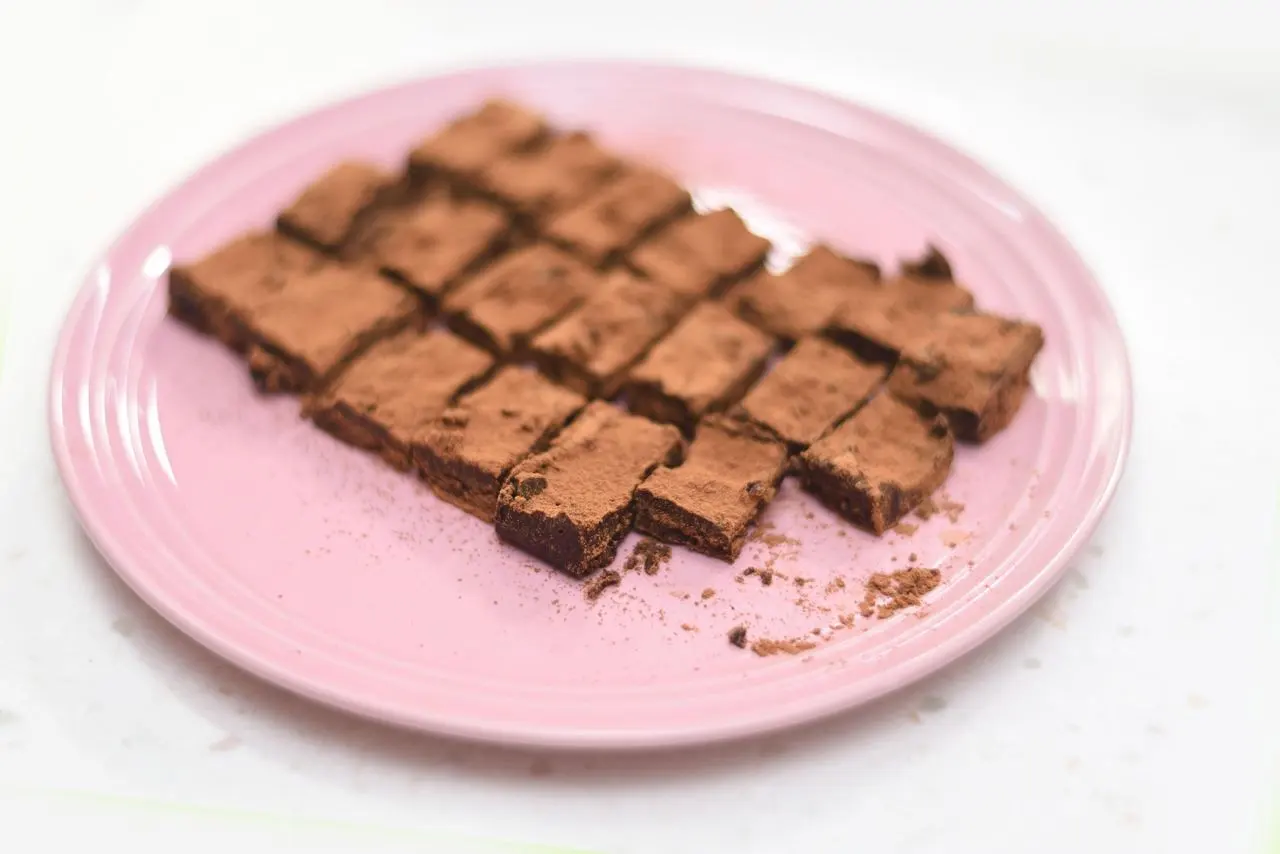
- Cool the brownies completely in the pan on a wire rack, lift them out with the foil, and slice them into 16 pieces (Jessica Gavin).
The page explains the reasoning for the gentle folding: mixing in more air makes the brownie tough and cakey. Cooling the chocolate before it meets the eggs is what keeps the batter smooth.
Pan, doneness and cooling
Metal pans heat quickly, which brings faster bake times and firmer edges, while glass and ceramic conduct heat more slowly and hold it longer, which can bake unevenly (Popular Science). Gavin prefers metal, and if glass is your only option she advises lifting the brownies out of the pan after 10 minutes and moving them to a wire rack (Jessica Gavin).
The test for doneness is a toothpick that comes out with a few moist crumbs, since a clean toothpick signals an overdone brownie, per Gavin’s recipe. That is partly because of carry-over cooking: brownies keep cooking after leaving the oven because of the heat held inside them (Popular Science).
Oven advice varies slightly between sources. The Daily Meal gives a range of 30 to 35 minutes at 325 and 350 degrees Fahrenheit (The Daily Meal), while Gavin gives about 30 minutes at 350ºF (Jessica Gavin). Because ovens differ, rely on the toothpick more than the clock.
Serving, storing and finishing touches
Gavin’s page suggests flaky sea salt on top, mix-ins such as chocolate chips or walnuts, and ganache or buttercream for a richer finish (Jessica Gavin). If you want to frost them, the guide on how to make buttercream covers that side of the job.
Cut brownies keep in an airtight container for up to 5 days at room temperature, or wrapped portions can go in a resealable bag in the freezer for up to 1 month, per Gavin’s storage notes. Wiping the knife between cuts helps, because the fudge sticks to the blade.
Squares cut from a single pan sit naturally alongside the ideas in these easy traybake recipes, if you want more bakes of that shape.
Frequently asked questions
Can I use oil instead of butter?
Show answer
A study described by Popular Science compared butter with nut oils such as almond, pistachio and walnut. The oil versions came out softer, more elastic and moister, and they were often preferred in taste tests.
How can I use less sugar without a drier brownie?
Show answer
Researchers cited by Popular Science found that smaller sugar particles gave brownies that tasted sweeter, softer and moister than larger crystals did. The suggestion is a finer sugar such as caster sugar in place of granulated.
Does salt belong in a sweet batter?
Show answer
Yes. According to Popular Science, a pinch will not make the brownies salty, and it helps your taste receptors pick up the sugar more effectively.
Will chocolate chips melt into the batter?
Show answer
Not completely. The fat-crystal structure of chips helps them hold their shape somewhat, which leaves small melty pockets, similar to chocolate chip cookies (Popular Science).