
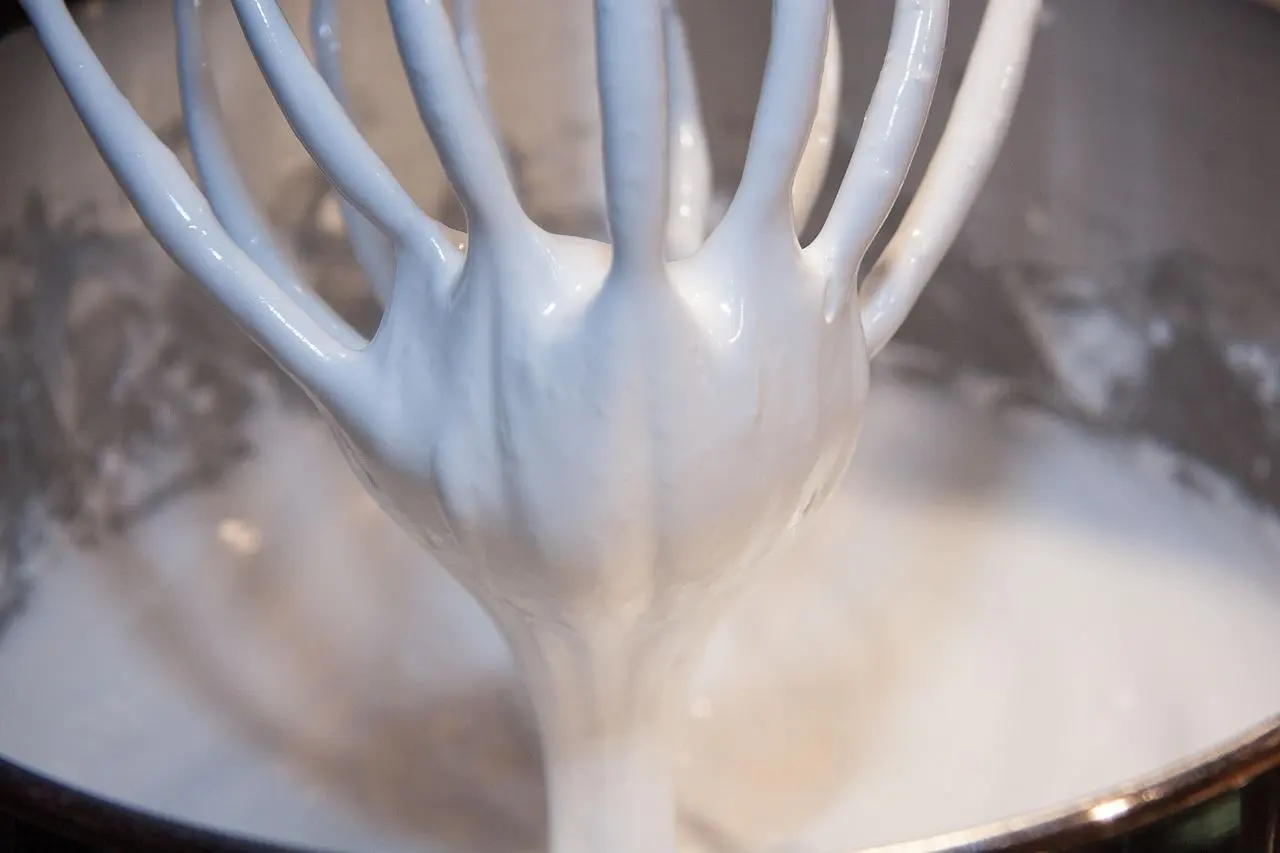
Worried your meringue will weep or collapse? Here’s how to make meringue that holds: weigh clean, room-temperature egg whites, add sugar by weight, and pick the French, Swiss or Italian method to suit your dessert.
This guide sits alongside other easy dessert recipes for home bakers.
| Item | Value |
|---|---|
| Swiss meringue: heat egg whites and sugar to | 160°F (71°C) |
| Italian meringue: sugar syrup temperature | 244°F (118°C) |
| Egg white to sugar ratio for stiff meringue, by weight | 1:1.5 |
| Rest time for separated egg whites at room temperature | 30 minutes |
These figures come from Pastry & Beyond and Cloudy Kitchen. They can change, so check the source before you rely on them.
What makes meringue work?
Meringue is a mixture of beaten egg whites and sugar, and egg whites consist of about 90% water and 10% protein, as Pastry & Beyond explains. Whisking makes those proteins unfold into a protein network that traps air, which is what turns liquid into foam.
As the whites are beaten, they pass through soft, firm and stiff peak stages, according to Wikipedia. They can also grow by up to 8 times in volume, says The Sunday Baker.
Timing matters. Wikipedia notes that proteins beaten for too long stretch too far and become too weak to support the foam, so stop once you reach stiff peaks.
French, Swiss and Italian meringue compared
The three classic types differ in how the sugar meets the whites and whether heat is involved.
| Type | How it is made | Typical use |
|---|---|---|
| French | Sugar added gradually to whipping whites, no heat | Cookies, dessert shells, batters |
| Swiss | Whites and sugar warmed over simmering water, then whipped | Pie toppings, torched finishes |
| Italian | Hot sugar syrup beaten into whipping whites | Fillings and toppings served unbaked |
The descriptions come from The Sunday Baker and Cloudy Kitchen. Techniques and safety advice can change, so check the sources before you rely on them.
French meringue
In French meringue, granulated sugar is gradually added directly to the whipping egg whites, per The Sunday Baker. It is the simplest method but also the least stable, and it should be baked as soon as it is prepared or it may start to separate.
The eggs are not cooked while mixing, so Pastry & Beyond cautions against using French meringue over tarts unless you use pasteurized eggs or bake it at 375°F (177°C) for 15 minutes. The concern it names is salmonella risk.
Swiss meringue
Swiss meringue is made by heating sugar and egg whites over simmering water until the mixture reaches 160°F (71°C), then whipping, as Pastry & Beyond describes. By then the sugar has dissolved, which you can feel by rubbing the mixture between your fingers.
Cloudy Kitchen notes that cooking the whites and sugar together over a double boiler means the meringue is ready to go straight out of the mixer. Pastry & Beyond adds that the result is dense and holds its shape very well over pies. If frosting is your goal, read how to make buttercream next.
Italian meringue
Italian meringue is made by beating a hot sugar syrup into the whipping whites, and the syrup is boiled to 244°F (118°C), the firm ball stage, according to Pastry & Beyond. Without a candy thermometer, you can drop a little syrup into cold water and check that it forms a ball and keeps its shape.
The hot syrup partially cooks the whites, so The Sunday Baker says it holds up longer than French or Swiss meringue. That makes it a fit for fillings and toppings eaten without baking.
Sugar ratios, acid and equipment
The simplest way to scale a batch is a ratio by weight. Cloudy Kitchen gives 1:1.5: weigh the egg whites, then multiply that amount by 1.5 to get the sugar.
For a firmer result, Pastry & Beyond says to use almost 1 part egg white to 2 parts sugar by weight, for example 100 grams of egg whites to 200 grams of sugar. A soft pie topping needs less sugar, and The Sunday Baker adds that the harder the meringue, the higher the sugar content.
Sugar also changes how you whip. It delays foaming but adds stability, so start the whites on their own and mix in the sugar gradually, according to The Sunday Baker.
Is acid needed?
Sources differ on acid. The Sunday Baker says it is entirely possible to make meringue without cream of tartar, though a little cream of tartar or lemon juice helps stabilize it, while the chemistry section of Wikipedia says a copper bowl or cream of tartar is required for firm peaks.
Too much acid can change the flavor or stop the meringue cooking properly in the oven. Pastry & Beyond also advises against pairing a copper bowl with an acidic ingredient, because the acid may dissolve too much copper into the mix.
Preparing eggs and equipment
A few habits protect volume, as listed by Pastry & Beyond:
- Separate the eggs while they are cold, because cold whites are easier to separate.
- Let the separated whites sit at room temperature for 30 minutes before beating, since room temperature gives the best volume.
- Keep the bowl and whisk free of oil, fat and water, and keep every trace of yolk out.
If the meringue will lighten another dessert, the same source suggests stopping at soft peaks, which makes folding easier.
How to make French meringue cookies, step by step
This method follows the French meringue cookies from The Sunday Baker, which bake in a low oven at 120°C (250°F). The finished cookies have a crisp, dry outside and a soft, chewy center, almost like marshmallow.
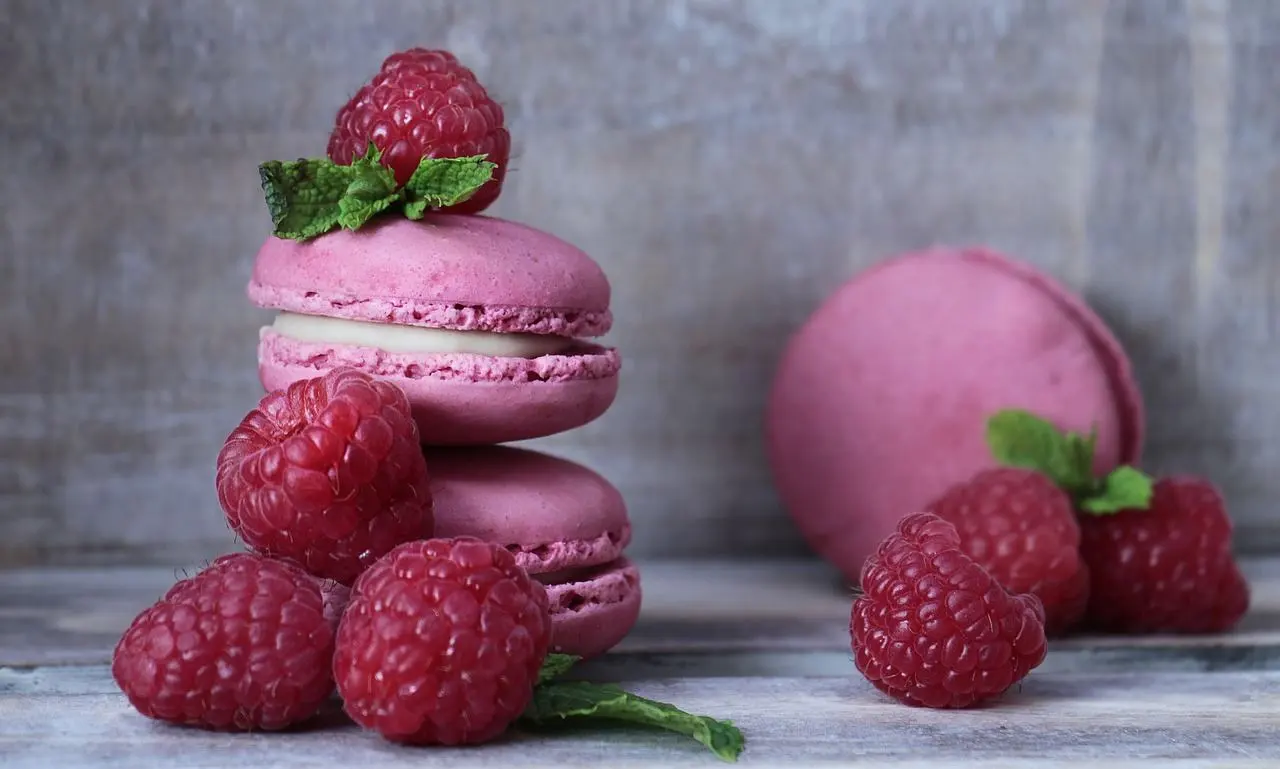
- Preheat the oven to 120°C (250°F), arrange the racks in the lower and upper thirds, and line two baking trays with parchment paper, as The Sunday Baker directs.
- Whip the egg whites with cream of tartar on high speed until thick and foamy, about 1 to 2 minutes.
- Keep whipping at high speed while gradually adding the sugar, which should take about 3 minutes.
- Add the vanilla, then whip until stiff peaks form, about 5 minutes more. The peak should stand up straight, and a bit rubbed between your fingers should feel smooth, meaning the sugar has fully dissolved.
- Scoop large spoonfuls onto the trays with a cookie scoop or two spoons, leaving some room between them.
- Bake for 60 to 90 minutes, then let the meringues cool completely on the tray before removing them gently.
Texture is a choice. Wikipedia says homemade meringues are often chewy and soft with a crisp exterior, while a uniform crisp texture may be achieved at home by baking at 80-90 °C (176-194 °F) for up to two hours.
Once cool, The Sunday Baker says the meringues will last up to 4 days in an airtight container.
How to fix weeping and other common problems
Weeping, also called sweating, shows up as beads of golden liquid on the meringue. Wikipedia says it can form when meringue is overcooked, undercooked, stored in a refrigerator, or made on a humid day.
- Puddle underneath or beads on top: a puddle of liquid under the meringue points to undercooking, while beading on top points to overcooking, per Wikipedia.
- Sweating French meringue: the sugar was inadequately dissolved in the whites, which is also a problem for high-moisture pie fillings, according to Wikipedia. The smooth-between-the-fingers test above is the check.
- Soggy meringue: egg whites and sugar both attract water, so meringue becomes soggy when refrigerated or stored in a high-humidity environment, as the same page explains.
- Lost volume: Pastry & Beyond says overbeaten whites lose their volume, so stop as soon as the peaks are right.
- Foam that will not build: traces of yolk, oil, fat or water in the bowl or on the whisk work against beating, the same source warns.
For a different kind of sweet bake, try the millionaire’s shortbread recipe.
Frequently asked questions
Do I need cream of tartar to make meringue?
Show answer
No. Both The Sunday Baker and Pastry & Beyond treat acid as optional, though the latter says it is most worth considering for the delicate French style because it makes overbeating less likely.
Which meringue is safest for desserts that are not baked?
Show answer
Swiss and Italian. Both heat the whites, so Pastry & Beyond recommends them over French meringue for unbaked treats when your eggs are not pasteurized.
How much sugar goes with each egg white?
Show answer
Pastry & Beyond assumes an egg white weighs about 35 grams and uses 50 grams of sugar per white for stiff meringues. Weighing your own whites and applying a ratio is the more flexible route.
Can I brown meringue under the broiler instead of using a torch?
Show answer
A reply from the author in the comments of the Cloudy Kitchen meringue guide says yes, depending on the pie filling. A delicate filling such as custard may melt, so keep a close eye on it.