
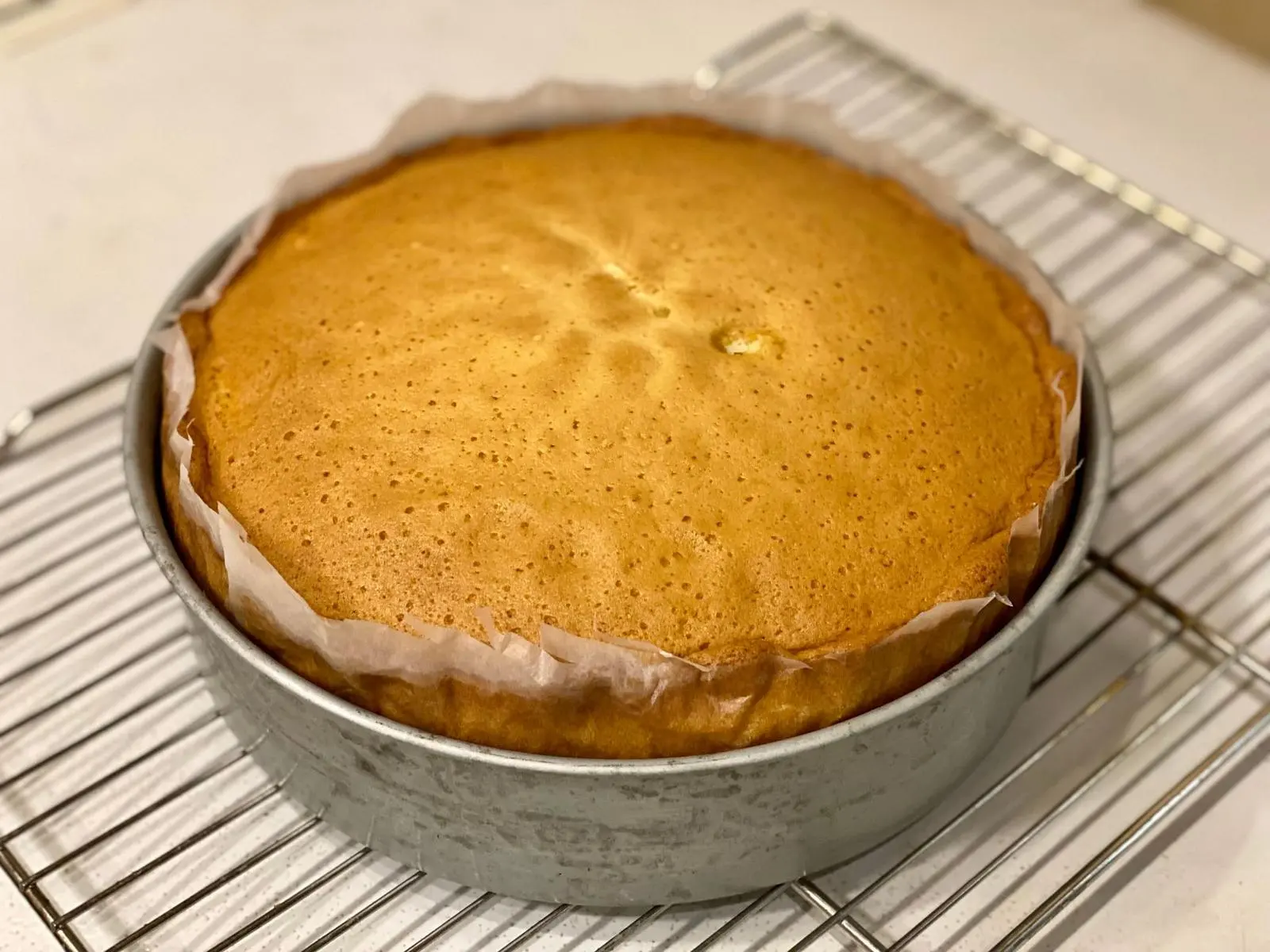
Worried your cake will stick and tear on the way out? Here is how to line a cake tin: trace the base onto baking parchment, cut a circle and a side strip, and grease the tin so the paper stays put.
This guide sits inside our wider look at baking for beginners, and it covers one small habit that makes every sponge easier to turn out.
| Item | Value |
|---|---|
| Paper overhang above the tin rim | 2-3 inches |
| Extra paper around the base of a square or rectangular tin | Around 3cm |
| Side strip height for a round tin | One inch taller than the sides of the tin |
| Fat that keeps the paper steadiest | Butter or margarine rather than oil |
| Bakes that need no greased tin | Those made in cases, such as muffins or cupcakes |
These figures come from Dr. Oetker UK and Betty Crocker UK. Guidance can change, so check the source before you rely on them.
What you need before you start
The kit is short and most of it is probably in your kitchen already. Giallo Zafferano lists parchment paper, softened butter, a pencil, a brush, scissors and a ruler.
- Non-stick baking parchment
- A pencil and sharp scissors
- A pastry brush
- Butter or margarine (oil works, with a catch covered below)
- The tin you plan to bake in
According to Dr. Oetker, parchment is a heat-resistant, non-stick paper. It stops bakes sticking, helps you lift a cake out and keeps the tin clean.
How to line a round cake tin
A round tin needs two pieces: a base circle and a long strip for the sides. Cut both before you touch the butter, so your hands stay clean.
- Set the tin on a sheet of parchment, draw around the base with a pencil, then cut the circle just inside the line so it sits flat.
- Cut a strip slightly longer than the circumference of the tin and, as Betty Crocker UK suggests, one inch taller than the sides.
- Brush the inside of the tin lightly with butter or margarine.
- Press the strip around the inner wall, letting the top edge stand a little above the rim.
- Lay the circle on the base and press it down.
For lifting a bake out, Dr. Oetker calls 2-3 inches of overhang a good benchmark. It also warns that too much paper can hang into the bake and affect how it looks.
A strip pressed into a curve can bunch up. GoodtoKnow folds the strip lengthways and makes a series of angled cuts along the folded line, so it bends round the wall without wrinkling.
How to line a square or rectangular tin
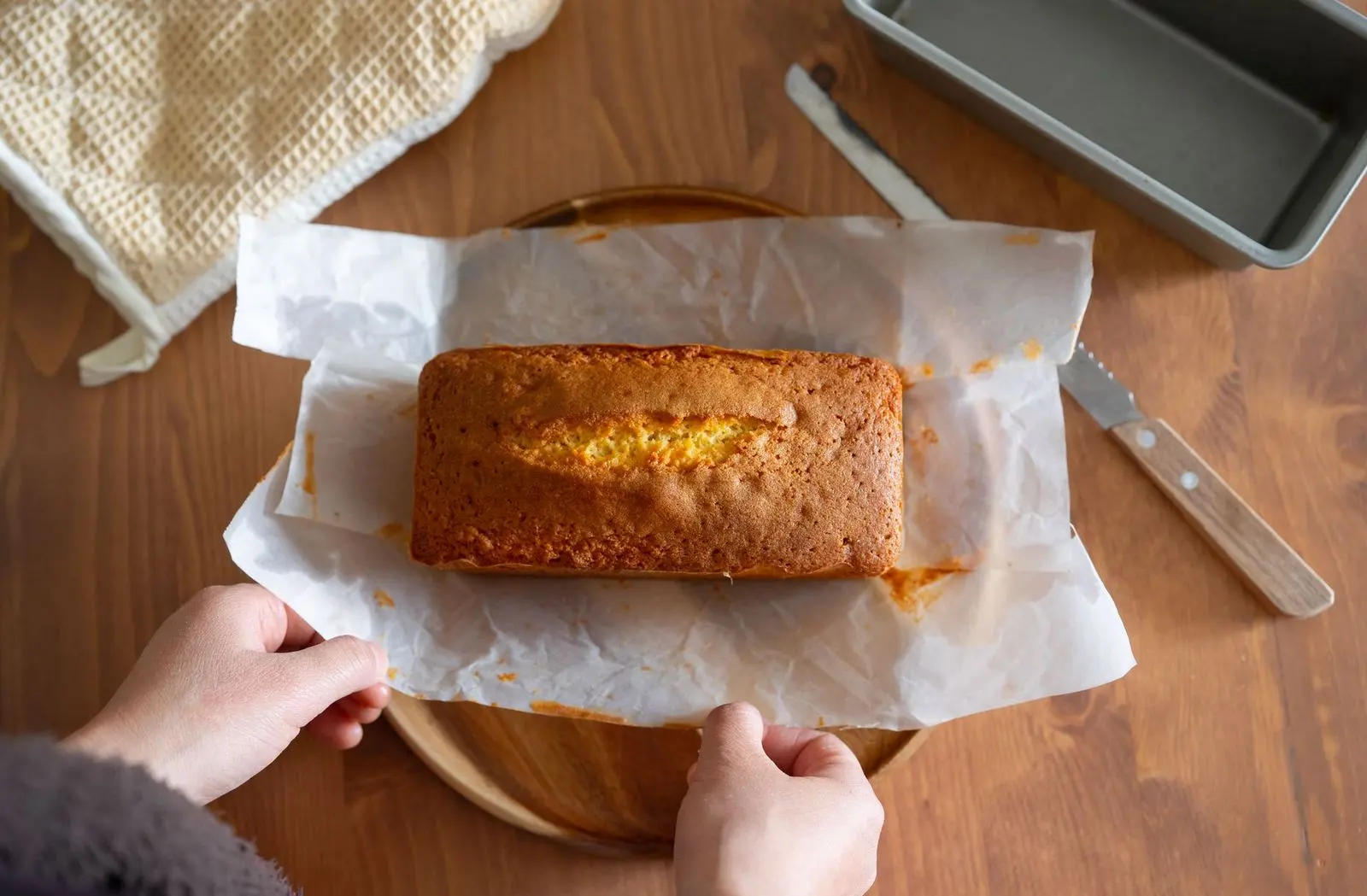
Corners are where paper goes wrong, so the main job is to make the paper bend neatly. Dr. Oetker cuts one sheet larger than the base, leaving around 3cm all round to cover the floor and rise up the sides.
- Place the tin on the parchment and cut around it with a margin, so the sheet covers the base and climbs the edges.
- Snip a short line toward the centre at each corner so the paper can fold in.
- Brush the tin with a thin coat of butter, margarine or oil.
- Press the paper in, overlapping the paper at the cut corners, and smooth out any creases or bumps.
There is a second method if you prefer neat, sharp corners. GoodtoKnow measures a strip for the sides, folds it to mark each corner, and cuts a V shape on every fold so the paper fits the tin.
Once the tin is ready, the batter is the next job, and our guide to creaming method baking covers a technique used for many sponges.
Butter, oil or spray: which holds the paper best?
The fat you brush on is the glue that holds the paper in place. Dr. Oetker says that with oil the parchment tends to move around when the mixture goes in, while butter lets it sit with little movement.
Cooking spray behaves much like oil. The same source says it can make the baking paper shift more as you add the mixture to the tin.
- Butter or margarine: the steadiest option for holding paper still.
- Oil: usable, but expect more slipping.
- Spray: also usable, with the same slipping risk as oil.
For a chocolate cake, Dr. Oetker adds a flavour step. Brush the lined paper with fat, sift cocoa powder in, tilt the tin to coat it, then tap out the excess.
When you can skip the paper, and when you shouldn’t
Paper is a safeguard rather than a law. Dr. Oetker says you can grease the tin with butter and dust it with flour, tapping out the extra, though parchment still gives more reassurance that the cake will not stick.
The same page says to line for bakes likely to stick, including cakes, brownies, loaves and cheesecakes. Bakes made in cases, such as muffins or cupcakes, do not need a greased tin.
Silicone tins are a special case. Dr. Oetker does not require lining there but recommends it, because the non-stick effect becomes less effective over time.
On the sides, GoodtoKnow notes that lining them is optional, but it stops the cake sticking to the edges and burning around the outside. It also says baking parchment is the better choice, because greaseproof paper is more likely to stick to the base and need peeling off.
If a cake comes out lined and still sags, the page on why does my cake sink in the middle looks at other causes.
Frequently asked questions
How big should the base circle be?
Show answer
Cut just inside your pencil line rather than on it. GoodtoKnow uses this trick so the disc drops flat onto the base without riding up the wall.
What do I do if the paper creases in the corners?
Show answer
Make the small cuts at each corner, then press the paper down firmly until no bumps remain. A V-shaped cut on each fold, as GoodtoKnow describes, gives the paper room to tuck in.
How do I get the cake out in one piece?
Show answer
Let the cake cool, then run a knife between the cake and the tin to loosen the edges, as GoodtoKnow advises. Then hold the paper tabs above the rim and lift the cake out.
Is lining useful for a no-bake cheesecake?
Show answer
Yes. Giallo Zafferano says that without oven heat to firm the filling, the parchment does structural work: it keeps the edges true and helps every slice come out intact.