
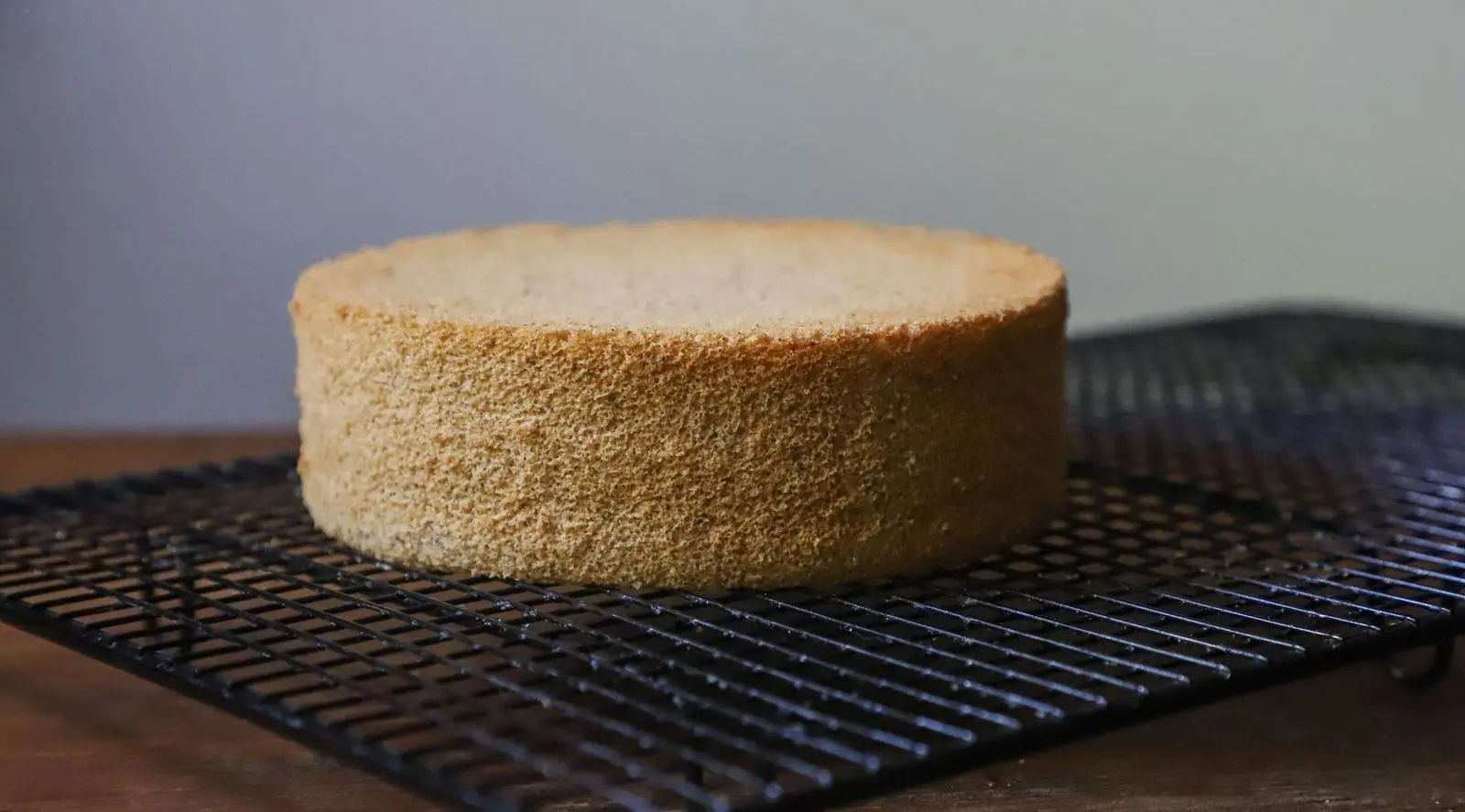
Your cake came out domed, then dipped, so you’re asking: why does my cake sink in the middle? Usually the centre was underbaked, over-leavened, or chilled by an opened oven door. Each has a fix.
New to this? The guide to baking for beginners covers the wider basics behind problems like this one.
| Item | Value |
|---|---|
| Keep the oven door closed at the start of baking | The first 20 minutes |
| Replace baking powder | Every 6 months |
| Fill cake pans only | Two-thirds full |
| Rotate pans only after | Around 3/4 of the baking time |
These figures come from The Baking ChocolaTess and Nigella.com. Guidance can change, so check the source before you rely on the figures.
Underbaking: the most common cause
According to Chelsweets, the most common reason a cake sinks is that it is underbaked. If the cake isn’t baked through, the centre never gets a chance to set and it collapses, leaving a dense, doughy middle.
A cake bakes from the outside in, so a cake taken out too soon can dip once it rests, as Frosting and Fettuccine describes. That makes the problem sneaky: Sporked points out that a cake can look completely finished on the outside while the centre is still underbaked.
Before you pull a cake out, look for these signs of doneness, drawn from Frosting and Fettuccine and Chelsweets:
- The edges are pulling away from the sides of the pan.
- The top is firm rather than jiggly.
- A toothpick in the centre comes out clean or with a few moist crumbs.
Oven temperature, hot spots and preheating
Your oven temperature may not match the dial. Chelsweets notes that when an oven runs hot, the cake layers brown more quickly, which can make you think the cake is done before the centre has set.
One thermometer reading may not tell the whole story. Nigella.com advises checking with an oven thermometer several times and in several positions, because ovens can have hot and cold spots and a cake sitting over a cold spot may cook slowly or not properly.
Preheating and timing matter too. The same source says the oven should be properly preheated before the batter is mixed, since batter that sits around too long lets the raising agents finish working before the cake is baked, and the centre then sinks back.
If your recipe gives a temperature in a different scale from your oven, a page on oven temperature conversion can help you set the dial correctly.
Too much, or tired, leavening
Too much leavening is the next usual suspect. Chelsweets explains that an excess of baking soda or baking powder makes a cake rise too high, too quickly, so the gas escapes before the centre is baked through.
Using the wrong one causes trouble as well, because baking soda is about 3x more potent than baking powder and the two are not interchangeable. The same source recommends levelling the spoon against the edge of the box or a knife so each measure is accurate.
Old leaveners can also let you down. Frosting and Fettuccine suggests a quick test for each one:
- For baking powder, put 1/2 tsp in a bowl and add a little hot water. If it bubbles, it is still good.
- For baking soda, put 1/2 tsp in a bowl and add hot water plus a little vinegar. If it bubbles up, it is still active.
- If either fails to bubble, replace it.
For a routine, The Baking ChocolaTess recommends replacing baking powder every 6 months and following the recipe’s ratios closely.
Oven door, pan size and mixing
Opening or slamming the oven door
A peek is tempting, but Nigella.com warns that a blast of cold air can make the unset centre of a cake sink. If you must rotate pans, wait until the cake is almost fully set and move the pans gently.
Advice on how long to leave the door shut varies. The Baking ChocolaTess says the first 20 minutes, while Frosting and Fettuccine says at least the first 25-30 minutes, and adds that a slammed door sends a rush of air that can deflate the bubbles the leavening is making.
Pan size and batter depth
A different pan size from the one the recipe names can drastically change the bake time, according to Chelsweets. Sporked adds that a pan that is too small leaves the batter deeper, so it takes longer to bake through and presses harder on the centre.
Filling the pan too far is the same problem from another angle: The Baking ChocolaTess, linked above, says too much batter in a small pan means the centre won’t set before the edges brown. For larger layers, Chelsweets suggests flower nails, which help conduct heat into the centre.
Preparing the tin properly is part of the same routine, and the guide on how to line a cake tin walks through it.
Mixing too little or too much
Mixing can tip the balance either way. Sporked says undermixing leaves ingredients unevenly distributed, creating weak spots, while overmixing or over-aerating the butter and sugar can put too much air into the batter so the cake rises dramatically and then can’t hold its height.
How can you fix a cake that has already sunk?
Most sunken cakes can be rescued, and Sporked notes that most aren’t actually ruined. Try these options, roughly in order:
- Return it to the oven. If the middle sinks right after the cake comes out, Chelsweets says a couple more minutes will not lift the dip but can help an undercooked centre bake through.
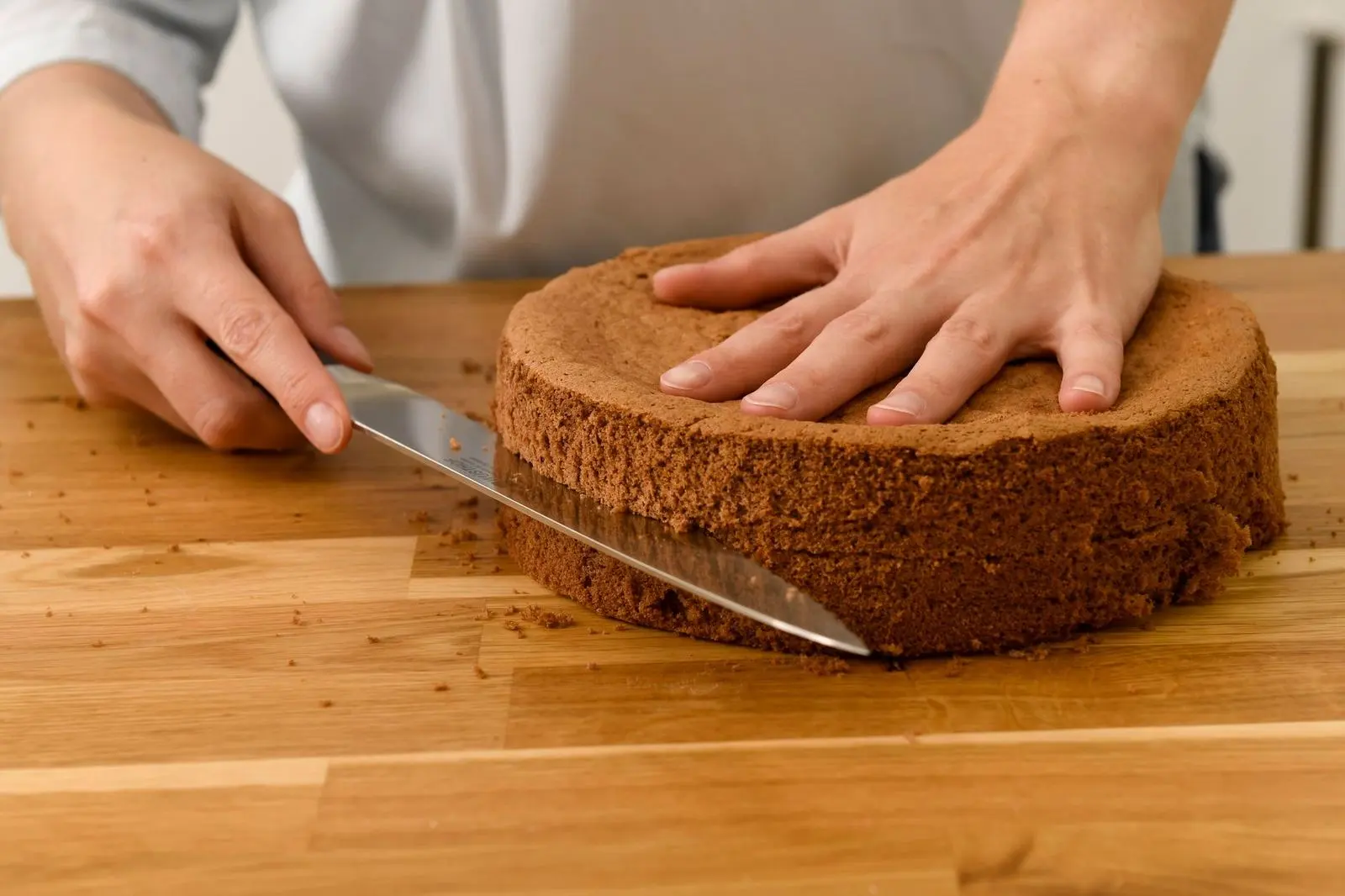
- Level it. Cutting away the sunken or raw section with a serrated knife leaves a flat layer, which works best when the dip is shallow.
- Fill it. For a deeper dip, Frosting and Fettuccine says you can fill the hollow with jam, custard or fruit before icing.
If a recipe keeps sinking even after you’ve checked the steps above, Chelsweets says the recipe itself may be the problem, and trying a different one is reasonable.
Frequently asked questions
Why does my cake sink only after it cools?
Show answer
Cooling exposes weak structure. The Baking ChocolaTess, at the link above, says a cake that rose too fast or was underbaked will fall once it leaves the oven.
Can too much sugar make a cake sink?
Show answer
Yes, according to The Baking ChocolaTess, excess sugar weakens the structure and delays setting, which can lead to collapse. Measure sweeteners as the recipe states.
Can I check on the cake without ruining it?
Show answer
Glance through the oven window or use the light instead of opening the door. Chelsweets recommends this over opening the door to peek.
Is a sunken cake still worth serving?
Show answer
Often it is. The dip is mostly cosmetic, and a little frosting or filling hides it, though a raw, doughy centre should be cut out first.